
Artemis III Delayed to Late 2027: Is the 2028 Moon Landing Still Possible? - Space Tales
Artemis III is delayed to late 2027. NASA confirmed this to Congress: SpaceX and Blue Origin will not be ready before this date for the orbital docking test. The 2028 moon landing remains the goal, but the margin for success is shrinking.

Artemis III is delayed until late 2027. NASA confirmed this to Congress: SpaceX and Blue Origin will not be ready before this date for the orbital docking test. The 2028 moon landing remains the stated goal, but the margin for achieving it shrinks with each passing month.
April 2026
Artemis II
Successful crewed lunar flyby
Late 2027
Artemis III
Orbital docking test, delayed
2028
Artemis IV
First targeted moon landing, if 2027 holds
2029+
Artemis V
Sustainable presence on the Moon
Late 2027 New window for Artemis III, pushed back from mid-2027
2028 Moon landing goal maintained by NASA
2 Suppliers delayed: SpaceX Starship HLS and Blue Moon
~1 year Available margin between Artemis III late 2027 and 2028 moon landing
Artemis III Delayed: Why the Landers Are Falling Behind
SpaceX and Blue Origin Not Yet Ready for Orbital Rendezvous
The timeline for Artemis III entirely depends on two private companies: SpaceX with the Starship HLS, and Blue Origin with Blue Moon. Both must demonstrate that their landers can perform a rendezvous and docking in low Earth orbit with the Orion spacecraft. This is where the bottleneck lies. Neither is ready before late 2027.
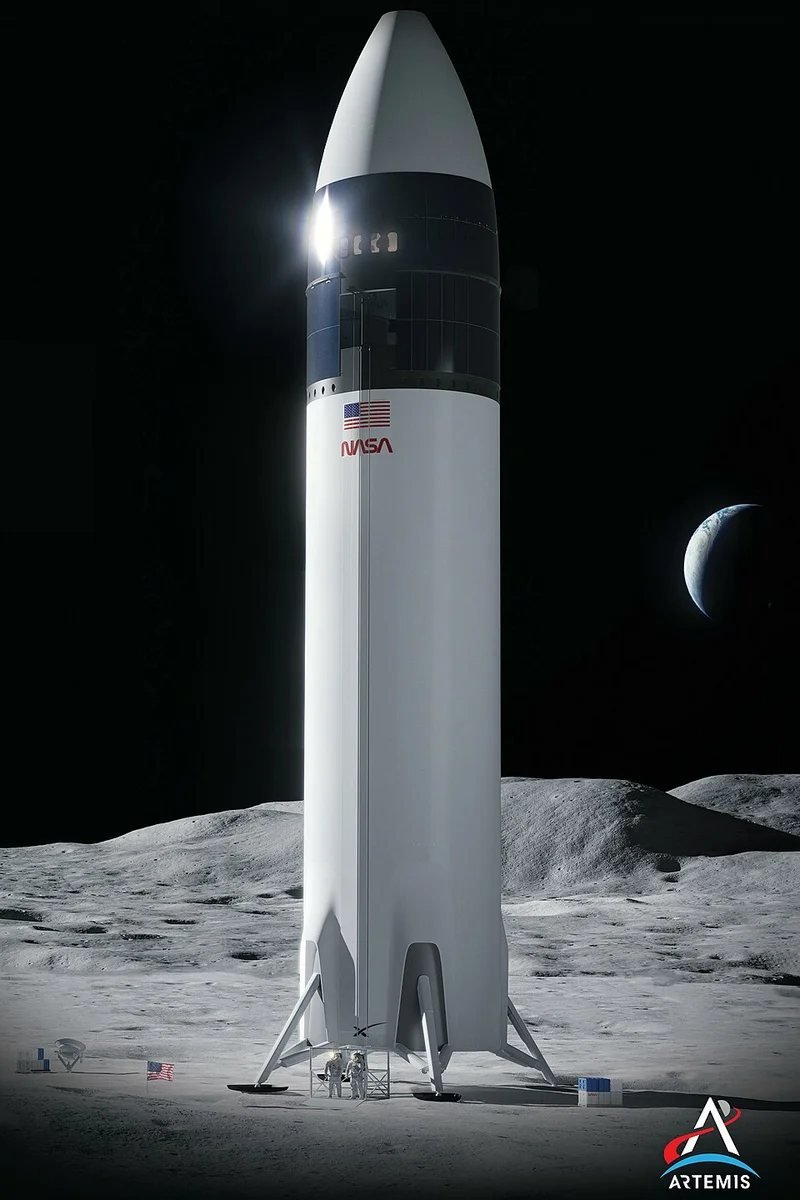
Jared Isaacman stated before Congress: both suppliers indicated they could be available for this test by late 2027. Not before. Thus, Artemis III slips several months from the initial schedule and remains what it has become since February 2026: an orbital demonstration mission, without any attempt at a moon landing.
What is the Orbital Rendezvous of Artemis III?
Since the architecture revision in February 2026, Artemis III is no longer a moon landing mission. The crew aboard Orion will perform a rendezvous and docking with the Starship HLS and Blue Moon in low Earth orbit. This is a dress rehearsal before attempting the descent to the lunar surface during Artemis IV.
Starship HLS and Blue Moon: Two Approaches, Two Challenges
The Starship HLS is an extraordinary vehicle: over 50 meters tall, with an unprecedented payload capacity in the history of lunar landers. Its complexity is also its main weakness. Before descending to the Moon, it must be refueled in orbit, an operation that has never been tested at this scale.
Blue Moon takes the opposite approach: a multi-stage architecture, closer to what Apollo used, and more conventional. Blue Origin has less experience with large reusable launchers than SpaceX, and this is reflected in the timeline. NASA wanted two options to avoid putting all its eggs in one basket. It now finds itself with two baskets that are both delayed simultaneously.
Is the 2028 Moon Landing Still Realistic?
Yes in Theory, But the Margin is Shrinking
NASA still states 2028. But with Artemis III delayed to late 2027, the logistics chain that follows is compressed to the maximum. After the orbital test, data must be analyzed, systems validated, landers certified for crewed flight, and Artemis IV prepared. All of this in just a few months. It is feasible on paper. In practice, it leaves zero margin for any unforeseen issues.
What Ars Technica Says: "Put It in Pencil"
Ars Technica summarizes the situation in three words: "put it in pencil". The 2028 timeline is not set in stone. Each new delay from a supplier pushes the entire chain back, and neither SpaceX nor Blue Origin has yet validated their landers in real conditions.
Space.com specifies that even in the optimistic scenario, the moon landing would occur on a mission subsequent to Artemis III, most likely Artemis IV. If everything goes well by late 2027, 2028 remains within the realm of possibility. Not a certainty.
What Needs to Happen for 2028 to Hold
- ✓ Artemis II successful: validated in April 2026
- ⚠ Artemis III late 2027: Orion orbital rendezvous + landers, dependent on SpaceX and Blue Origin
- ⚠ Certification of landers for crewed flight after Artemis III: tight timeline
- ⚠ AxEMU spacesuits from Axiom Space validated: the OIG estimates a risk of slipping to 2030+
- ✗ No margin in case of further supplier delays: the chain is tight
Five conditions. Four still uncertain. SpaceX, Blue Origin, Axiom Space, NASA: each player is a potential point of failure. One slip and 2028 becomes 2029.
The Spacesuits: The Other Critical Variable
Axiom Space Facing the Same Scheduling Pressures
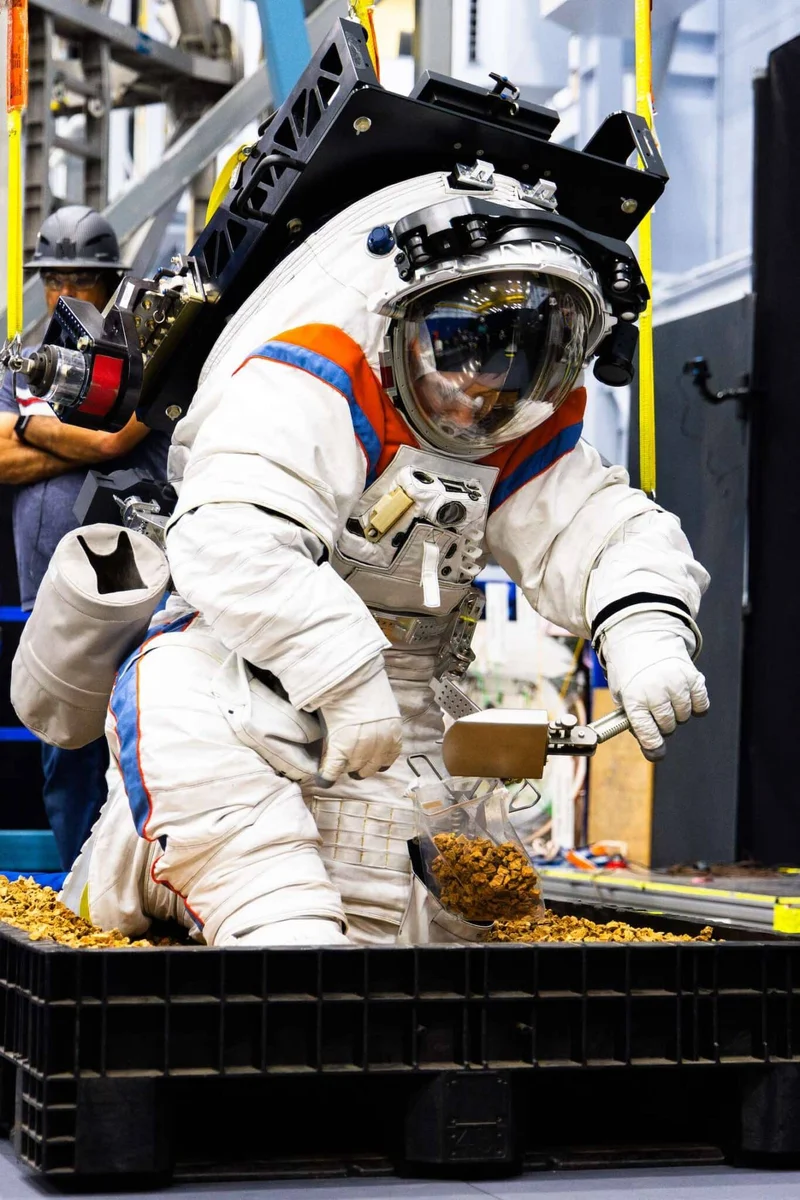
The landers are not the only obstacle. The AxEMU lunar spacesuits from Axiom Space are the subject of an alarming report from the Office of Inspector General, NASA's independent oversight body. Verdict: the first flight demonstrations could slip to the early 2030s. Without validated suits, no one can step onto the lunar surface. This is a second lock, as critical as the landers, and equally uncertain.
NASA maintains that it is confident, and Axiom Space assures it is working to meet deadlines. The same formulas apply as with the landers. For more information on this specific point, our article on the Artemis 2028 timeline and the risks related to spacesuits details the situation.
What This Changes for the Future of the Program
Artemis has been accumulating delays since Artemis I, originally scheduled for 2020 and launched at the end of 2022. This is not new. What changes is that the available margin shrinks with each slip. Our article on the uncertainties of the Artemis 2028 timeline already highlighted this. The real question is no longer whether 2028 is technically possible. It is about how many additional delays the schedule can still absorb before it breaks.
Sources
- Space.com – Artemis 3 Delayed to Late 2027: Is the 2028 Moon Landing Still Possible?
- Ars Technica – Artemis III Earliest Late 2027: Put It in Pencil
- Reuters – NASA Prepares for First Human Return to the Moon
- NASA – Official Artemis III Page
- Numerama – SpaceX and Blue Origin Force NASA to Revise Its Plans