
CP 2026 Assessments: The Good News Schools Were Waiting for in Reading and Math
The results of the national mid-term assessments for the year 2026 have just been released, providing a precise overview of the achievements of 776,000 first-grade students. With solid reading foundations and persistent challenges in mathematical reasoning, here’s what to remember to best support your child during this pivotal stage of their education.
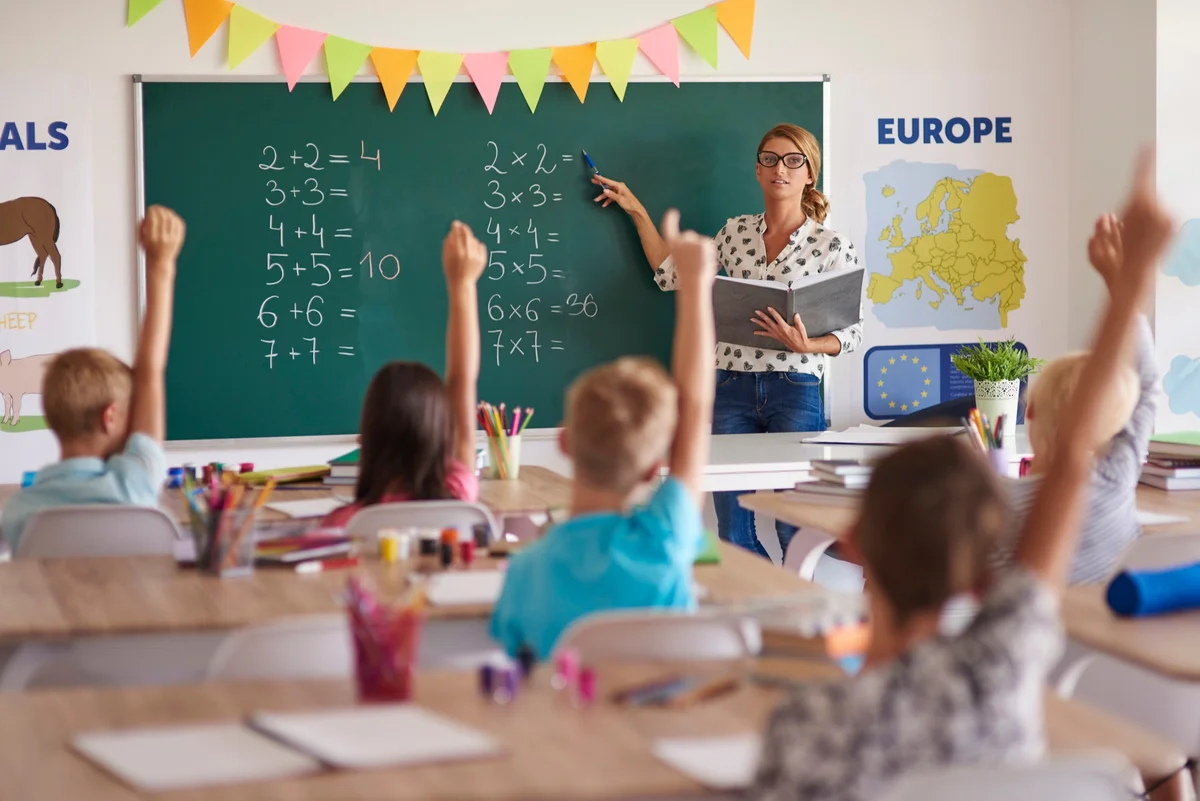
The results of the national mid-term assessments for the year 2026 have just been released, providing a precise overview of the achievements of 776,000 first-grade students. With solid reading foundations and persistent challenges in mathematical reasoning, here’s what to remember to best support your child during this pivotal stage of their education.
The Fundamentals of Reading Are Well Established
For the eighth consecutive year of assessments, the news is quite encouraging regarding the entry into written language. The vast majority of first-grade children now master the “code”: they know the names of the letters, the sounds they produce, and can manipulate phonemes with ease. These skills, essential for future learning, show a nice stability compared to the previous year.
There is even a pleasing long-term progression. Since 2020, students' performances have improved in writing syllables and reading words aloud. This technical foundation seems to be increasingly well integrated by students, indicating effective foundational work in the classroom from the first term.
Autonomous Comprehension Remains a Point of Vigilance
While deciphering words becomes automatic, the next step—making sense of solitary reading—remains more complex. The synthesis results indicate that the understanding of sentences read alone is the least mastered skill in French this year. This is, in fact, one of the few areas where a slight decrease in success is observed compared to the figures from 2020.
There is also an interesting distinction between genders: while girls generally achieve better results in French, particularly in oral comprehension, the gap with boys tends to widen specifically in autonomous reading. For parents, this highlights the importance of continuing to read stories with their child, asking questions about the narrative, and not assuming that knowing how to “decode” means having fully understood.
Mathematics Progresses Despite Challenges in Logic
On the numerical side, the trend is upward. For three key skills (placing a number on a number line, problem-solving, and addition), the results for 2026 are higher than those for 2025. Children are increasingly comfortable writing whole numbers and comparing them, proving that their number sense is becoming firmly established.
However, problem-solving remains the bane of many schoolchildren. It is the most challenging exercise of this session, as it requires crossing reading, understanding the statement, and mathematical logic. Boys often achieve higher results in this area, but the performance gaps between the sexes are gradually narrowing, particularly in writing numbers. This positive dynamic shows that mathematics is becoming an increasingly accessible playground for all.
A Tool to Support Every Child Towards Success
Beyond national percentages, these assessments primarily serve as a pedagogical compass. They help identify students who may need an extra boost, **particularly in priority education areas where performance gaps remain significant, especially in oral comprehension and problem-solving.