
In the Vegetable Garden at the End of March, Beginning of April | Terra Potager
As March ends, the weather can be warm yet cool for our protected plants. Frosts are still forecasted, so protective covers should remain in place. Despite the unpredictable weather, temperatures are rising, and activity is intensifying in the garden.
- Learn to harvest all year round
- Shop
- Our calendar/almanac
- Our ACD greenhouses
- The vegetable garden review
- Order seeds
- Gardening products, fertilizers
- Online course 'I succeed with my tomatoes'
- Vegetable garden tips
- Topics
- Successful sowing and planting
- Soil: amendments, fertilizers, compost
- Vegetable gardening techniques
- Pests in the vegetable garden
- Growing vegetables
- Flowers, aromatic and medicinal plants, biodiversity
- Connect
- Contact
Select a page
- Learn to harvest all year round
- Shop
- Our calendar/almanac
- Our ACD greenhouses
- The vegetable garden review
- Order seeds
- Gardening products, fertilizers
- Online course 'I succeed with my tomatoes'
- Vegetable garden tips
- Topics
- Successful sowing and planting
- Soil: amendments, fertilizers, compost
- Vegetable gardening techniques
- Pests in the vegetable garden
- Growing vegetables
- Flowers, aromatic and medicinal plants, biodiversity
- Connect
- Contact
Currently, 10% off your order at our partner Comptoir des jardins. More information
Do you want to learn how to grow your own vegetables? Thanks to the Terra almanac, you will never forget your sowing: just open your file, look at the current month, and you will find all the sowing to be done (explained in detail), allowing you to produce vegetables all year round.
Click here to learn more and take advantage of our launch offer available now!
Friends of Terra, hello,
March ends with sometimes warm weather, but also quite cool for our protected plants. Frosts are still sometimes forecast in the coming days: so let's not put away the protective covers just yet.
Despite the capricious and usual weather of this early spring, temperatures tend to rise, days are getting longer, and activity is gradually intensifying everywhere.
Damping Off
It’s the peak season for sowing. Salads, tomatoes, cabbages, and other herbs that you have carefully prepared are sprouting well in your trays… and a few days later, disaster strikes! The seedlings collapse and disappear, for no apparent reason.
Don’t look too hard, you’ve just suffered an attack of fungi, such as Botrytis, Fusarium, Phytophthora, or Pythium… This cryptogamic disease is more commonly known as damping off. It attacks at the root level or at the collar of young seedlings. Once it starts, unfortunately, there’s not much you can do other than dispose of the seedlings and start over.
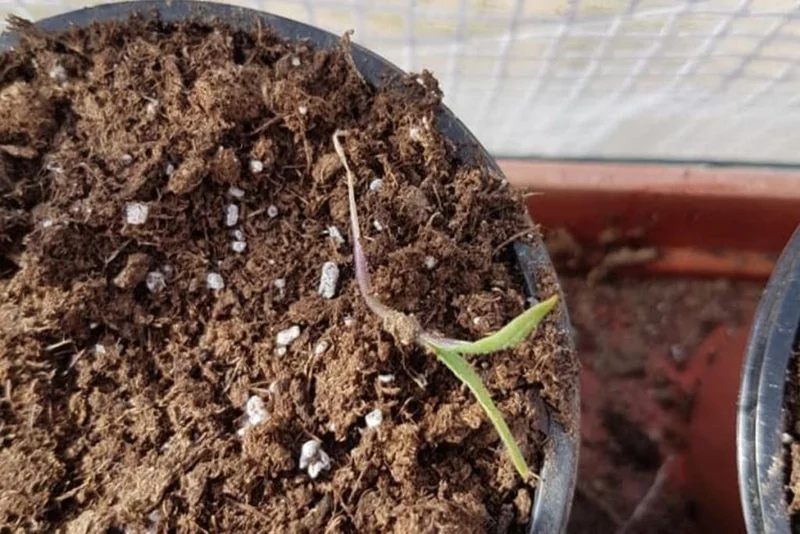
The development of these fungi is mainly linked to excess moisture: too high humidity, excessive watering, lack of ventilation for the seedlings (you know, the mini-greenhouses with a lid that we use to help our seedlings sprout, without thinking to ventilate them regularly…). In principle, commercial potting soils have been sterilized and are free of fungi, but probably not the bags you opened several weeks or even months ago…
To counter this disease, there is a simple solution: the use of charcoal. Make sure to choose containers that are well-drained. Place coarse materials (such as sifted potting soil residues) at the bottom, mixed with pieces of charcoal in the drainage layer. Then mix finely crushed charcoal into the seedbed.
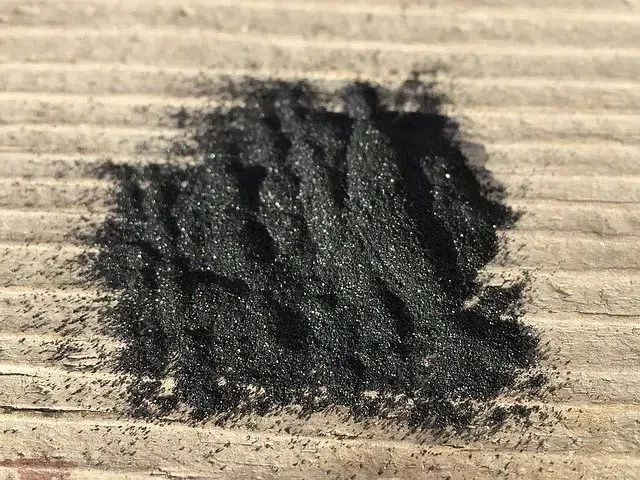
Make a light sowing, then cover with a thin layer of substrate mixed with charcoal powder. You can then water with water in which pieces of charcoal have soaked. Ideally, prepare a substrate that is sufficiently moist at the time of sowing, and do not water again until they develop sufficiently.

Go further:
• Understand and avoid damping off
Focus On…
At the end of March – beginning of April, it’s the peak time for growing lettuce. We are also entering the potato planting season, which gardeners in the milder climates may have already planted. Let’s take a closer look at these two staple vegetables in the vegetable garden.
• Growing Lettuce
Growing lettuce is quite easy to succeed. It often involves sowing in a nursery (in the ground or in containers), followed by transplanting in the garden. With sowing, rather than buying seedlings from a garden center, you can more easily choose your varieties. There are many, and they can be divided into 7 groups. Note that modern varieties offer better resistance to Bremia (downy mildew).
- Butterhead Lettuce: they form a nice tight head, with leaves crisper than a butterhead lettuce. They are sown from February to July for varieties resistant to bolting.
- Head Lettuce: there are varieties suitable for spring, summer, or autumn. Their heads vary in size depending on the variety. Green or red, there is a wide selection of varieties. But be careful to choose your variety according to the season: some are not suitable for summer cultivation, as they bolt very easily.
- Cutting Lettuce: they can be harvested whole or leaf by leaf over a longer period. They are sown from February to September. These are varieties commonly used in mixed salads.
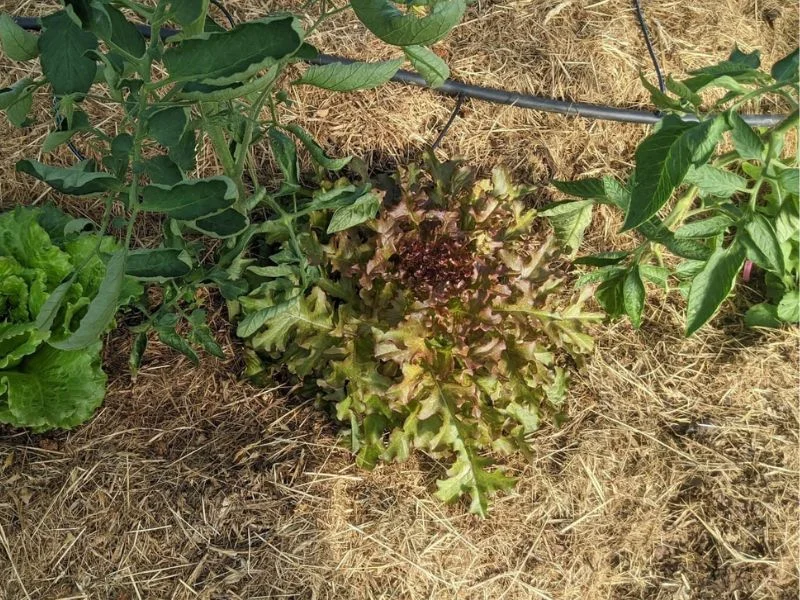
- Winter Head Lettuce: they have very good resistance to cold and winter weather. They produce nice heads for spring. They are sown from mid-August to the end of September and transplanted before winter.
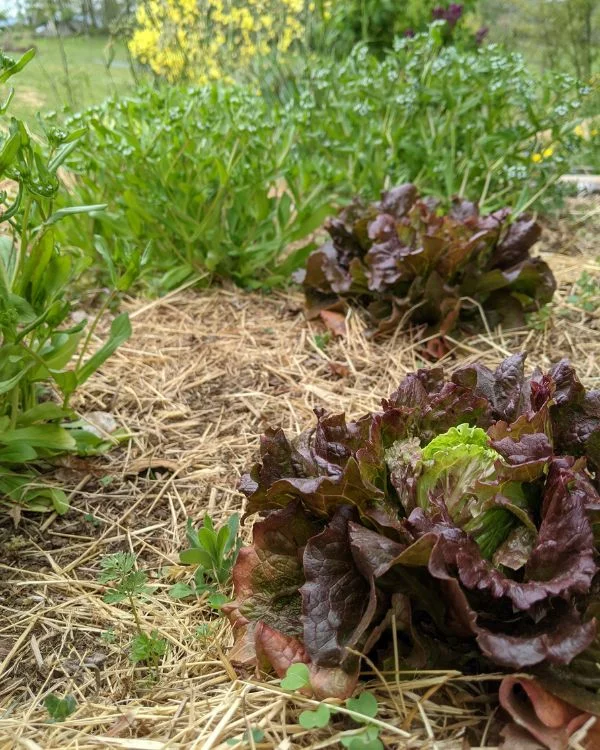
- Romaine Lettuce: they come in the form of beautiful elongated, voluminous, and crunchy heads. They are suitable for summer growing conditions, especially in case of drought. They are sown from late March to July.
- Butterhead Lettuce (Sucrine type): their leaves are thick, crunchy, and sweet, and their heads are quite small. They are easy to grow and resist bolting very well. They are sown from March to September.
Lettuce sowing is done in cells, trays, window boxes, or in a nursery in the ground. You can also sow in rows, in place, and thin later (or let the slugs do the thinning!).
If sowing in cells or trays, they can be transplanted into pots before planting.
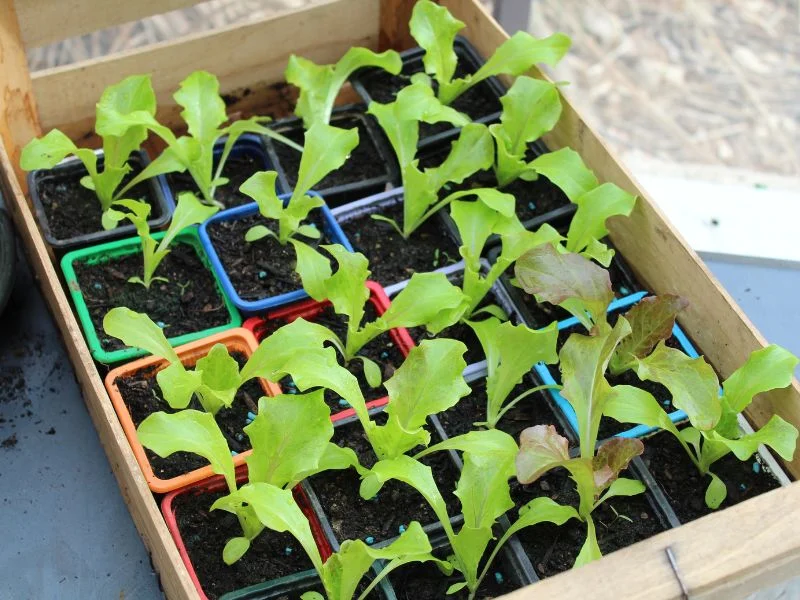
Make sure to stagger the sowing every 15 days/3 weeks, in small quantities suited to your consumption, to better spread your harvests. When they bolt, they tend to do so all at once. If you have a large quantity, it will all be lost. What a shame…
They are not afraid of the cold (the germination will be slower): sowing in a cold greenhouse is ideal. You will repot them 3 weeks to 1 month after emergence. Transplanting occurs when their development stage is sufficient, that is, at 3 or 4 true leaves.
Make sure to have a moist, loose surface soil (there’s no need to work it deeply considering the root system of lettuces is not very developed), which you will have enriched with compost if you have it; otherwise, no worries).
Lettuce loves the sun, except in the height of summer (favor partial shade then). Transplant them about 30 cm apart. You can transplant them closer together to harvest before maturity. But be careful in this case of rot, which will develop due to humidity and higher temperatures.
When transplanting, do not bury them too deep: plant at collar level (the lettuce should move in the wind). Water regularly to keep the soil moist. Don’t hesitate to give it a little boost with a diluted urine watering (one liter of urine for 9 liters of water).
If the main pests spare you (slugs, cutworms, wireworms), you can start harvesting 8 to 10 weeks after planting.
Go further:
• Properly sow your lettuces
• Properly plant and maintain your lettuces
• Growing Potatoes
Another iconic vegetable of the garden, the potato, which is planted in rich, loose soil.
There are many varieties, depending on the culinary use you want to make (firm, tender, or floury flesh), and according to the earliness of the harvest (from 70 to 90 days after planting for early varieties like the famous Amandine, up to 150 days for the later ones like Bintje).
You can buy pre-sprouted plants (more expensive), but the simplest is to get them to sprout yourself. Remove them from the net (the sprouts will break when they develop) to spread them in a crate or place them in egg cartons. Ideally, place them in the light, at a temperature of 10 to 15 °C, for about a month.
The saying goes that you plant them when the lilacs bloom. It is possible to plant them earlier, but be sure to protect them from the cold, especially from frost.
When the sprouts are nice and green, relatively short (avoid long, fragile white shoots, in the case of plants that have lacked light), place them in the ground in a trench 10 to 15 cm deep, at least 30 cm apart.
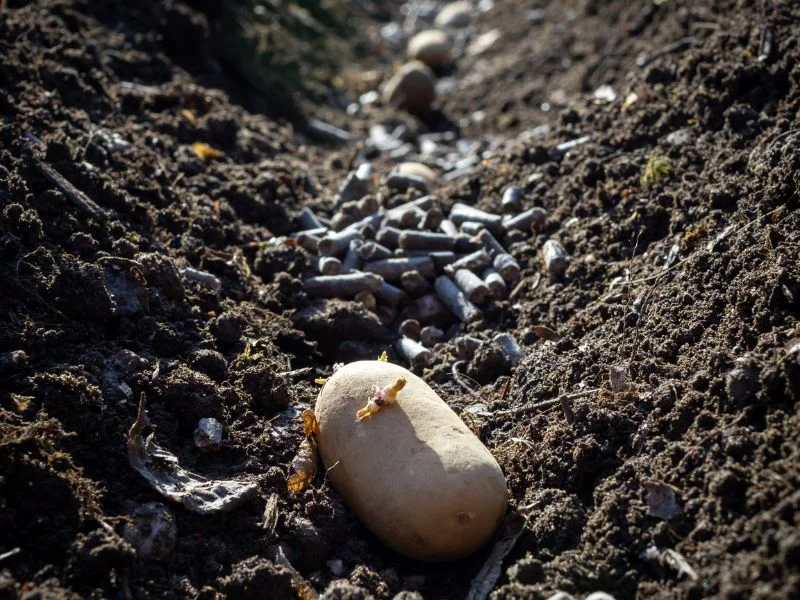
As this is a greedy crop, you can add compost or well-composted manure directly into the trench (definitely not fresh, as it would cause diseases). Cover with soil, either by making a mound that will promote warming, or without hilling (in which case you will need to hill later when they reach 10 to 15 cm in height). Hilling helps to better group the future tubers and prevents them from greening when exposed to light (remember that solanine is toxic). A thick mulch and a forcing cover will speed up the growth and protect it from the cold. Also, be careful to ensure that the crop is well-hydrated, or you risk losing yield: don’t hesitate to water it!
Another possibility for growing them is to place the tubers directly on the ground, every 30 to 40 cm.
They will be covered with a small mound of potting soil, compost, or composted manure.
Then everything will be covered with a thick layer of mulch (dead leaves, hay, straw, clippings, but no more than 5 cm in the latter case to avoid heating due to fermentation). Once they have emerged, add more mulch as they grow.
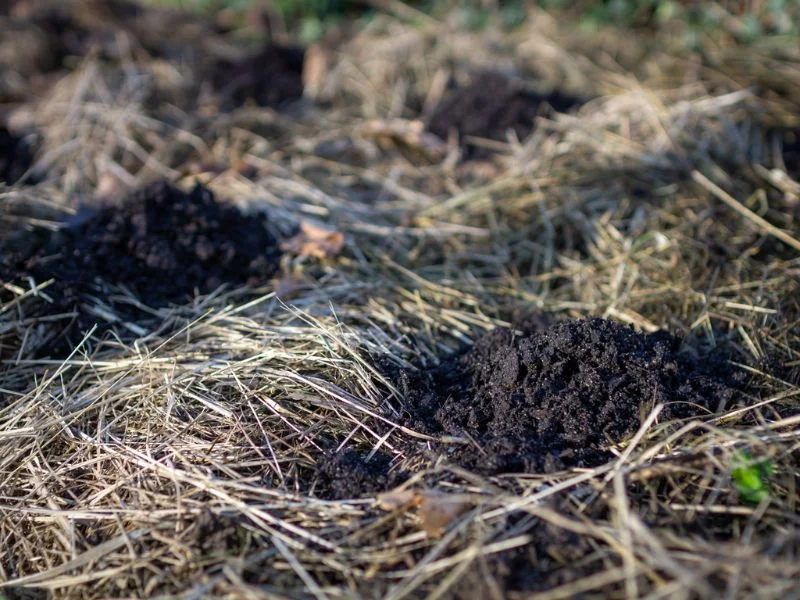
With this growing method, harvesting is easier, the tubers are cleaner than in the ground, and above all, you can easily take them as needed without removing the whole plant, allowing the remaining tubers under the mulch to continue growing. It’s worth trying, although it doesn’t always work well in every context…
Go further:
• Succeed in potato cultivation
• [Video subscribers] Succeed in planting potatoes
What to Do in the Garden at the End of March?
During this end period...