
Recharge in 9 Minutes: BYD's Achievement That France and Europe Are Awaiting
BYD is deploying charging stations in China that can recharge an electric car in nine minutes. This advancement is eagerly anticipated by France and Europe, which have now developed a robust charging network.
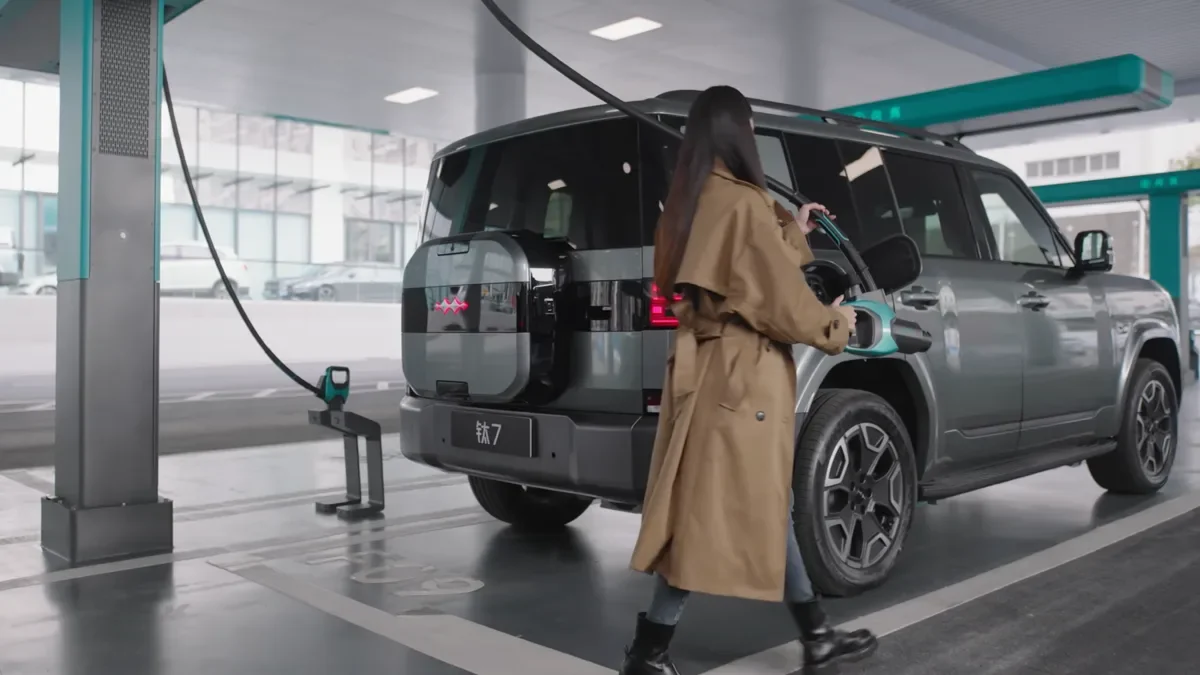
The charging time remains one of the main barriers to purchasing an electric vehicle. While Western markets are grappling with infrastructure that is gradually improving, the Chinese manufacturer BYD is making rapid progress in its domestic market. During the launch of its Han L SUV, the brand announced that it has already installed thousands of charging stations capable of recharging a battery in less than ten minutes. This spectacular technical advancement is eagerly awaited by France and the rest of Europe.
A Charge as Fast as Refueling in China
BYD unveiled the extent of its network during the launch of the Great Tang. The manufacturer has deployed 6,682 flash charging stations across 321 Chinese cities. This massive rollout is part of a campaign called "Flash Charging China," launched earlier this spring, aimed at eliminating range anxiety that still deters many drivers from switching to electric.
The technical performance of this network is impressive. Each connector delivers up to 1,500 kW of power in direct current, a figure that places these stations in a category of their own. Specifically, a compatible battery charges from 10% to 97% in just nine minutes. This brings the charging time closer to that of refueling a conventional vehicle, fundamentally changing the perception of electric charging.
To grasp the difference, it is important to note that this power of 1,500 kW is several times what the most powerful fast chargers currently available in the Western market can offer. BYD had actually been spotted testing this technology in real conditions earlier this year before launching the large-scale deployment.
A Frenzied Deployment Pace
BYD did not waste time building this network. The manufacturer started off strong by installing 5,000 charging stations in less than a month, a pace rarely seen in the global automotive industry. The installation tempo slowed down during May and June, but the ambition remains significant: the brand aims for a total of 20,000 flash charging stations by the end of the year.
This strategy illustrates BYD's logic, which does not merely sell electric cars but seeks to control the entire ecosystem, from batteries to charging infrastructure. By mastering both the vehicle and the charging station, the manufacturer can optimize charging performance throughout the chain, which partly explains these record figures.
For a Chinese motorist, the experience is now similar to that of a traditional gas station: you stop, plug in, and in less than ten minutes, the car is ready to hit the road again. This type of usage could accelerate the adoption of electric vehicles in the world's largest market.
France and Europe Await This Type of Solution
This is the challenge for the Old Continent: while China is deploying ultra-fast charging stations on a large scale, France and Europe have significantly developed their own charging network in recent years. French highways are now well-equipped, major urban areas are multiplying charging points, and the coverage of the territory is vastly improved compared to just five years ago.
However, the power offered by BYD opens up a new perspective. The most efficient fast chargers in the European network still fall well below the 1,500 kW delivered by Chinese stations. For many hesitant French motorists considering the switch to electric due to wait times, a recharge completed in nine minutes would be a decisive argument.
BYD's entry into the European market is already a reality, as the manufacturer is expanding its presence on the continent. The question is when this flash charging technology will follow the same path as its vehicles, and whether local infrastructures can support such a surge.
A Technological Divide That Europe Is Closely Monitoring
This situation raises broader questions about the competitiveness of Western markets against the Chinese electric industry. China has invested heavily in its charging infrastructure in recent years, and BYD is one of its spearheads. The contrast with the power available at European charging stations, despite a now dense network, remains stark.
The barrier is not only technological but also related to the electrical grid. Operating 1,500 kW charging stations requires installations capable of handling such power demands, an engineering challenge as well as a land-use issue. This is one of the points that European operators will need to address to compete with what China is already offering.
This dynamic poses a fundamental question for manufacturers and policymakers in Europe. Is it really necessary to have such powerful charging stations to meet the daily needs of drivers? Some observers argue that most charging occurs at home or overnight, making ultra-fast charging less essential than it seems. Others emphasize that speed remains a decisive argument to convince motorists who are still reluctant to abandon internal combustion engines, especially for long highway trips.
Regardless, BYD's demonstration in China changes the perception of what is technically possible. A charge from 10% to 97% in nine minutes is no longer a laboratory promise but a reality being deployed on a large scale in hundreds of cities. The challenge now is to determine if and when this technology will cross borders to reach French and European drivers.
In the meantime, China maintains a considerable lead. BYD continues to expand its network with the goal of 20,000 announced stations, and each new compatible model enhances the appeal of this ecosystem. For European motorists attracted to electric vehicles, the hope of seeing nine-minute charging become a reality has never seemed more tangible as the Chinese brand expands its presence on the continent.