What to Do in the Garden at the End of May?
Discover gardening activities for late May, including sowing, planting, and tips for maintaining your vegetable garden.
- Learn to Harvest All Year Round
- Shop
- Our Calendar/Almanac
- Our ACD Greenhouses
- The Vegetable Garden Review
- Order Seeds
- Gardening Products, Fertilizers
- Online Course 'I Succeed with My Tomatoes'
- Vegetable Garden Tips
- Topics
- Succeeding with Seedlings and Plants
- Soil: Amendments, Fertilizers, Compost
- Vegetable Gardening Techniques
- Pests in the Vegetable Garden
- Growing Vegetables
- Flowers, Aromatic and Medicinal Plants, Biodiversity
- Connect
- Contact
Select a Page
- Learn to Harvest All Year Round
- Shop
- Our Calendar/Almanac
- Our ACD Greenhouses
- The Vegetable Garden Review
- Order Seeds
- Gardening Products, Fertilizers
- Online Course 'I Succeed with My Tomatoes'
- Vegetable Garden Tips
- Topics
- Succeeding with Seedlings and Plants
- Soil: Amendments, Fertilizers, Compost
- Vegetable Gardening Techniques
- Pests in the Vegetable Garden
- Growing Vegetables
- Flowers, Aromatic and Medicinal Plants, Biodiversity
- Connect
- Contact
Right now, 10% off your order at our partner Comptoir des Jardins. More information
Do you want to learn how to grow your own vegetables? With the Terra almanac, you won’t forget any sowing: just open your file, look at the current month, and you have all the sowings to be done (explained in detail), which will allow you to produce vegetables all year round.
Click here to learn more and take advantage of our launch offer available right now!
Hello friends of Terra,
The weather is still a bit capricious at this season, but don’t be discouraged 😉 After the violent slug attacks that occur at this time, the sun is finally coming out.
Let’s look at some activities to do in the garden right now.
Late May, Early June Sowing
In the ground: Swiss chard, beets, carrots, chicories (escarole and frisée), cabbages, cucumbers, squashes, zucchinis, endive, fennel, beans, lettuces, sweet corn, parsley, pumpkins, radishes.
Continue sowing salad, opting for summer varieties that are less sensitive to bolting. Place containers in the shade to avoid blocking germination, and to prevent young seedlings from scorching under the sun’s rays.
For sowing beans, proceed in small batches, every 15 days for example, rather than sowing all at once. This way, the harvests will be better staggered.
You can also grow varieties that flower well multiple times in the season, such as 'galion', or pole beans whose production is more staggered throughout the season.
Planting
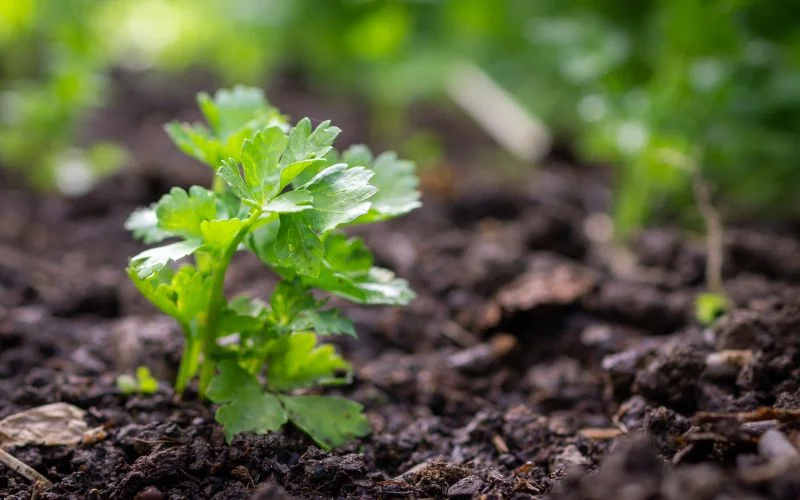
Continue planting in the ground: eggplants, celery, cabbages, cucumbers, squashes, zucchinis and pattypans, salads, sweet potatoes, peppers and chilies, leeks, tomatoes.
Mark the base of your squashes at planting with a stake, stick, or other means. The plants are still small at the moment, but in a few weeks, once the shock of planting has passed, they will grow rapidly and you won’t know where to water.
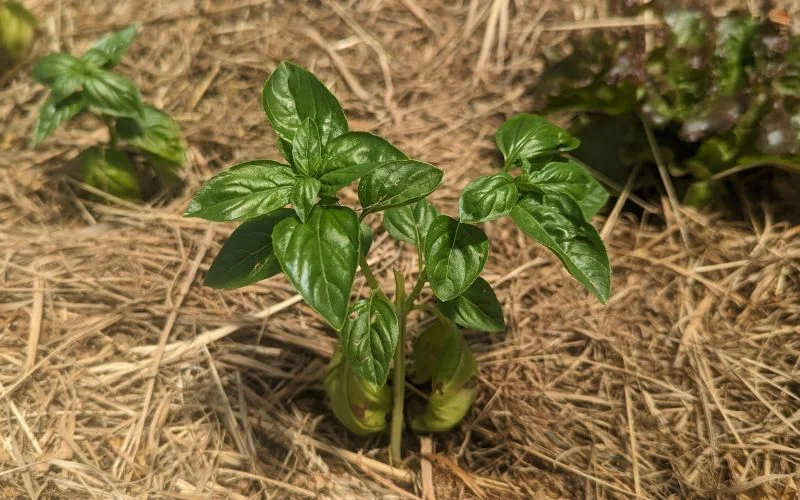
Once your basil is transplanted, start trimming it as soon as it resumes growth. This will encourage branching and slow down flowering.
What Else?
A few miscellaneous tips...
• It’s time to stake most summer crops (tomatoes, cucumbers, squashes, climbing beans, etc.). Besides the aesthetic aspect, staking saves space in the vegetable garden (practical for small areas) and greatly facilitates harvesting. It also prevents leaves and fruits from coming into contact with the ground and moisture, which could promote disease development. This operation requires some time to create solid and durable structures for the season. It would be a shame to see your setup collapse during the growing season under the weight of the fruits...
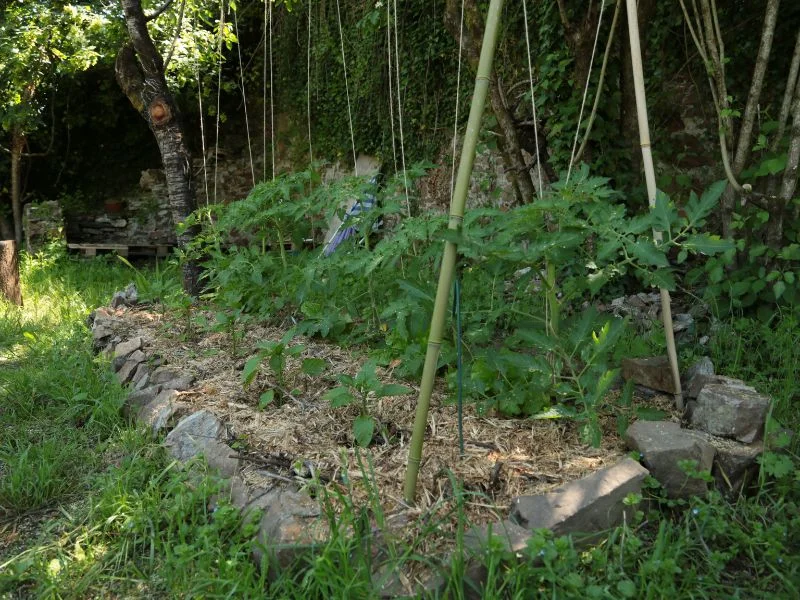
• With sunny days (and the current breeze!), now is the ideal time to mulch your growing beds. This will help retain good soil moisture, space out watering (prefer a deep watering rather than several small ones), prevent the formation of a crust during upcoming bad weather, and limit the development of weeds. Before mulching, be sure to weed carefully to prevent weeds from breaking through the mulch. And if your soil is already dry, give it a generous watering before covering it.

Go further:
• Everything you need to know about mulching in the vegetable garden
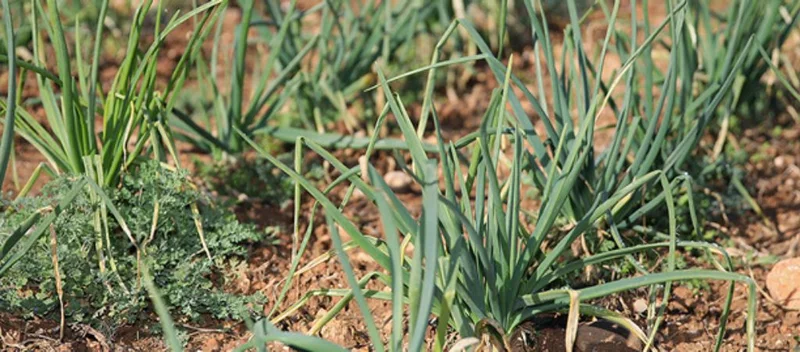
• If the dry spell continues through May and June, don’t hesitate to water your onions and shallots. This is indeed the time when the bulbs are developing and have high water needs for a good harvest. Depending on the frequency of rain, water sparingly but often. Stop watering a few weeks before harvest to allow the skins to harden, the foliage to wilt, and thus have a harvest that can be well stored in winter.
• Don’t hesitate to practice direct sowing for cucurbits. At this time of year, the plants stagnate with the cool nights. Direct sowing allows for better establishment of the root system, which tends to spiral in pots. Prepare your soil well, loosen it, amend it, and sow in clusters (2 to 3 seeds). Then cover with a forcing cloth, or the top of a bottle with the cap removed. Once the seedlings have emerged (watch out for slugs!), keep only the most vigorous plant.
• Start preparing shade and protection against direct sunlight. Remember the events of 2022 with heat spikes and their impact on vegetables. The intensity of solar radiation was just as destructive as the lack of water.
• It’s also time to think about the winter vegetable garden (difficult when summer isn’t even here yet!). This is indeed the season when many crops are sown (carrots, cabbages, Milan cabbages, kale, or cauliflower, beets) or transplanted (especially leeks). We invite you to refer to the article on the winter vegetable garden for more in-depth information.
Focus On...
Crop Rotation
This is the time when summer crops take over from early crops. Beets, beans, cabbages, tomatoes, squashes, peppers, and eggplants will now succeed fava beans, peas, radishes, and spinach...
You will need to clear your growing beds of crops. For this, you can uproot or cut the existing crop, depending on your practices. Don’t dispose of these residues, but recycle them! Feel free to use them as mulch, or compost them. Depending on their size, you may need to cut them: be careful with your fingers, wear gloves!
This is when you can see the usefulness of growing your own plants (or buying them). As soon as the beds are cleared of the first crops of the year, you can immediately transplant the succeeding crops. Compared to direct sowing in the ground, you gain almost a month. No time wasted! And this is especially interesting for small gardens where space is limited for direct sowing...
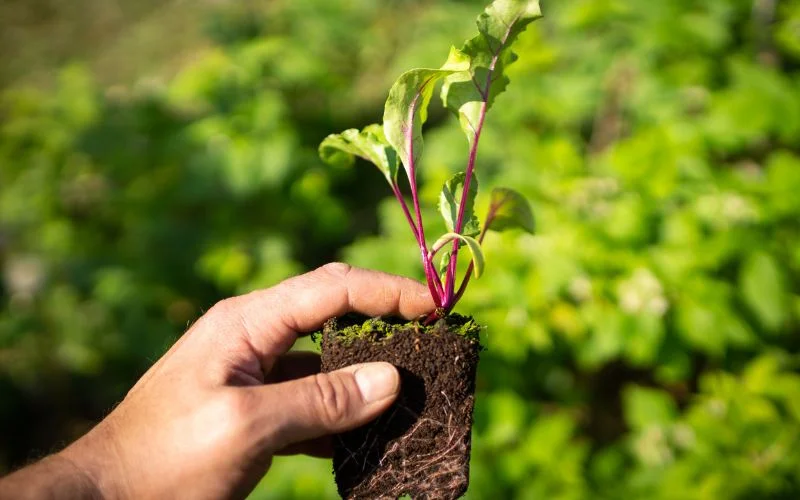
You should also not hesitate to interrupt a crop that is nearing its end. Generally, the peak of the most abundant harvests has passed. This sacrifice, always a heart-wrencher, is necessary so that you can plant the next vegetables, which can thus be planted at the right time to develop well.
This is even more true when you grow your own plants. Letting them wait in pots eventually harms them: the roots end up coiling (i.e., they turn on themselves in the pot, due to lack of space), the substrate is depleted of nutrients... In short, unless you proceed with a new repotting (consuming potting soil) or with supplemented watering with organic fertilizers, the recovery will be more complicated... Another method that is a bit less psychologically painful is intercropping. This technique involves planting or sowing the crop that will succeed the existing crop while it is still in place. You just need to be vigilant about competition between species regarding light.
Bean Cultivation
Or rather beans, we should say!
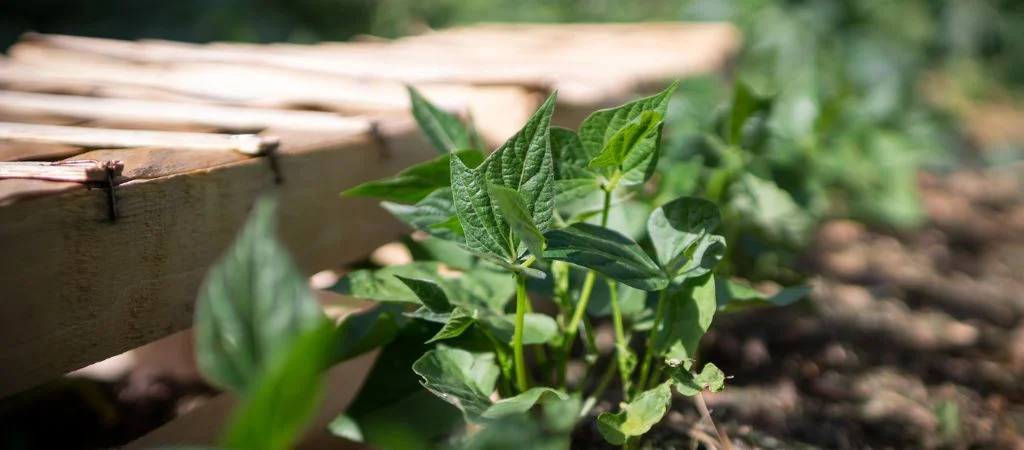
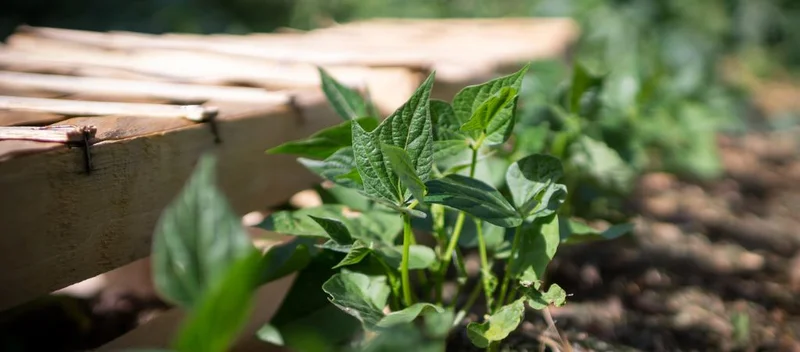
Diversity is abundant: bush beans, pole beans, snap beans, shelling beans... Some varieties are earlier, others later. Some produce only for a short period, others produce for longer. Some produce abundantly, others less... Thus, you have a choice between many varieties: it’s all a matter of taste.
As for the choice between a climbing variety and a bush variety, know that climbing beans are generally more productive than bush beans, take up less space due to staking, and their harvest is easier, as you don’t have to bend down...
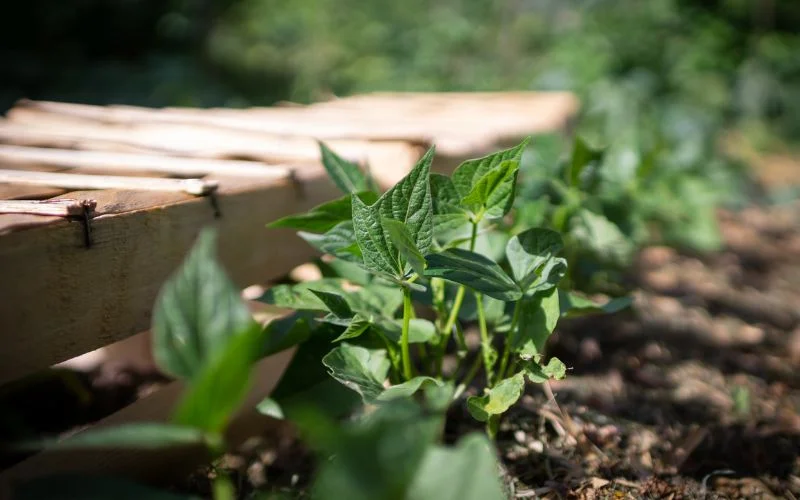
Beans are plants that are sensitive to frost and do not appreciate humidity too much. It is preferable to sow them from late April to early May, when the risk of frost is eliminated, and when the soil temperature is around 12 to 15 °C. In cooler and wetter conditions, germination would be slow, or may not occur at all (the seeds would rot).
Sowing should be done in light, well-loosened soil. The more aerated the soil, the better its development. You can amend it, but it’s not necessary since beans are legumes. If you do amend, the previous autumn is the best time: they do not appreciate fresh organic matter additions too much.
Sowing can be done in pots, early in the season to save some time, and have more developed plants that could better resist the slug attacks they are very fond of. In this case, proceed with sowing in clusters of 4 to 6 seeds.
For sowing in the ground, it can be done either in clusters of 4 to 6 seeds every 25 to 30 cm, or in rows with one seed every 5 to 8 cm. If the soil is dry, don’t hesitate to water your furrow before sowing. Make a furrow not too deep (about 3 cm). This way, the sun will warm the soil and germination will be faster.
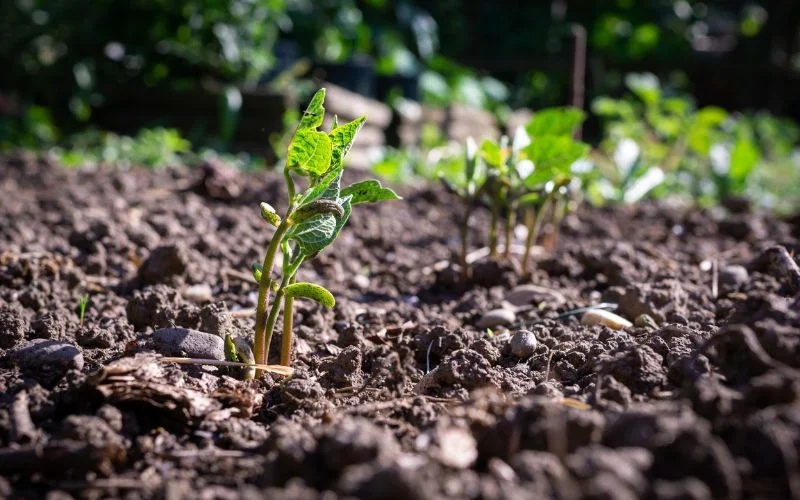
Once the seedlings have developed 2 well-formed leaves, proceed to hilling. For pole varieties, it’s time to set up the staking: either with poles (hazel sticks, bamboo, etc.), or with nets. Be careful about the strength and stability of the structure: during the peak growing season, there can be a good wind catch...
In really dry weather, don’t hesitate to water them every two or three days, at the base. Watering is especially important at the time of flowering. A tip for bush beans: sow your seeds in two rows, spaced about 40/50 cm apart. Water in the trench between the two rows created by hilling. This way, moisture will be better retained by the shade provided by the bean foliage.
Beans are harvested about two months after sowing (three for climbing varieties).