Drought and Heatwave in the Vegetable Garden: Our Tips | Terra Potager
Learn how to manage drought and heatwaves in your vegetable garden with practical tips on watering, shading, and plant care.
- Learn to harvest all year round
- Shop
- Our calendar/almanac
- Our ACD greenhouses
- The vegetable garden review
- Order seeds
- Gardening products, fertilizers
- Online course ‘I succeed with my tomatoes’
- Vegetable garden tips
- Topics
- Succeeding with your seedlings and plants
- Soil: amendments, fertilizers, compost
- Vegetable gardening techniques
- Pests in the vegetable garden
- Growing vegetables
- Flowers, aromatic and medicinal plants, biodiversity
- Log in
- Contact
Select a page
- Learn to harvest all year round
- Shop
- Our calendar/almanac
- Our ACD greenhouses
- The vegetable garden review
- Order seeds
- Gardening products, fertilizers
- Online course ‘I succeed with my tomatoes’
- Vegetable garden tips
- Topics
- Succeeding with your seedlings and plants
- Soil: amendments, fertilizers, compost
- Vegetable gardening techniques
- Pests in the vegetable garden
- Growing vegetables
- Flowers, aromatic and medicinal plants, biodiversity
- Log in
- Contact
Currently, 10% off your order with our partner Comptoir des jardins. More information
Do you want to learn how to grow your own vegetables? With the Terra almanac, you will never forget your sowing: just open your file, look at the current month, and you have all the sowings to be done (explained in detail), which will allow you to produce vegetables all year round.
Click here to learn more and take advantage of our current launch offer!
Episodes of extreme heat and heatwaves are becoming more frequent. They are even increasingly severe, with temperatures frequently approaching or exceeding 40° in some regions. The vegetable garden does not thrive in such extremes.
Just like the gardener who will flee this situation and seek shelter, drink, and avoid any effort. Let’s see how to anticipate, prepare, and adapt to these periods of drought and heatwaves that can quickly jeopardize our crops.
Summary
- Watering the vegetable garden during drought/heatwave
- Shading to limit drought in the vegetable garden
- Mulching to protect the soil of the vegetable garden from drought
- A hoeing is worth two waterings
- Miracle seeds?
- Crops are still resilient to heat
- Drought and heatwave in the vegetable garden: should we delay our sowings?
Watering the Vegetable Garden During Drought/Heatwave
Water Needs in the Vegetable Garden
Two main reasons generate a daily need for water.
- First, the constant transpiration of our crops to keep them healthy and growing.
- Second, the evaporation of water contained in the soil due to wind, heat, and the scorching rays of the sun.
This creates a need for evapotranspiration that the gardener must meet if nature does not take care of it. A passing rain that delivers 20 liters per m² every 5 to 10 days would meet this need. Unfortunately, in summer, these rains are rare, and the water needs for transpiration and evaporation are multiplied.
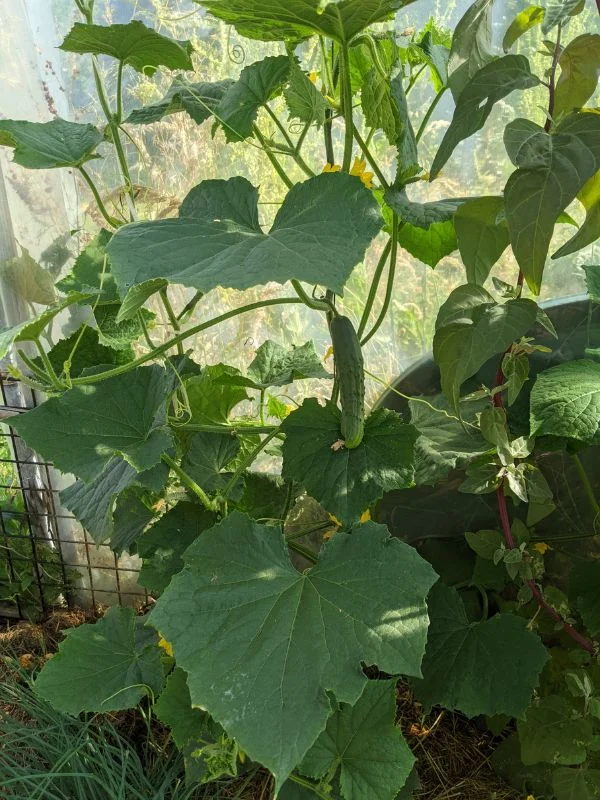
This water need varies greatly depending on the season, the stage of development of the crop, and the regions. We navigate between 0 and 10 liters of water per day per m². A garlic crop in northern France at the beginning of its growth will need less than one liter. In contrast, a cucumber crop in southern France at the peak of cucumber swelling will need 7 liters per day during heatwaves...
During a heatwave, especially in strong winds (high evaporation), needs can rise to over 10 liters per day per m² as the plants transpire heavily and evaporation increases. Just look at how the gardener sweats as soon as temperatures exceed 30°, with the slightest effort.
You thus have a good idea of the quantities of water to provide. We can summarize it as one good watering can per day during heatwaves and drought for each m² for your thirstiest crops. Otherwise, they can quickly become weakened, sick, and worse, unable to survive if the lack of water intensifies. However, certain contexts may allow you to partially free yourself from this amount. We will see that with good soil, you can water more abundantly but less frequently.
To better understand this phenomenon, conduct tests: try leaving some plants without watering to see how they behave. This way, year after year, you can adjust and better understand the needs of your plants in YOUR soil.
The Useful Water Reserve in the Soil, or the Inequality of Gardeners Facing Drought!
Every soil can store water and have a readily accessible water reserve for our vegetable crops. We call this the readily usable water reserve of the soil (the RFU). It is heavily studied due to the significant stakes of irrigation. Every drop saved is a plus for the environment and the wallet.
In general, without going into too much detail, a balanced texture soil (silt, clay, sand) can store nearly 150 liters of water in the first meter of depth. A crop that sends its roots down to about 30 centimeters (average rooting) can thus tap into 50 liters of water.
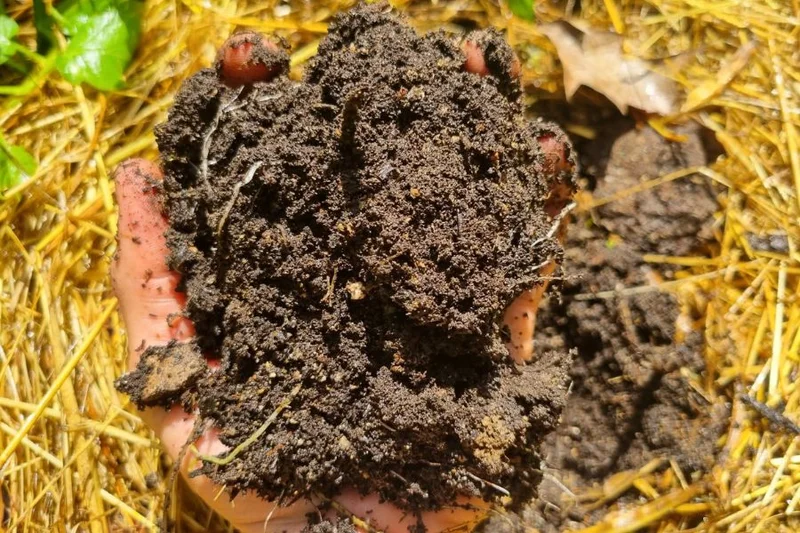
This shows that you can space your waterings by a good 5 days. However, you will need to provide a substantial amount of water each time. In this case, 5 watering cans if you want to fill this useful reserve to the brim. They will be consumed in a few days given the arid weather.
A sandy soil will have a much lower useful reserve, just 30 liters in the top 30 centimeters of depth. Water quickly drains deep with this overly porous soil (think of the beach that dries out very quickly...). Water more frequently and less abundantly, for example, 10 liters every day or at most, 20 liters every two days.
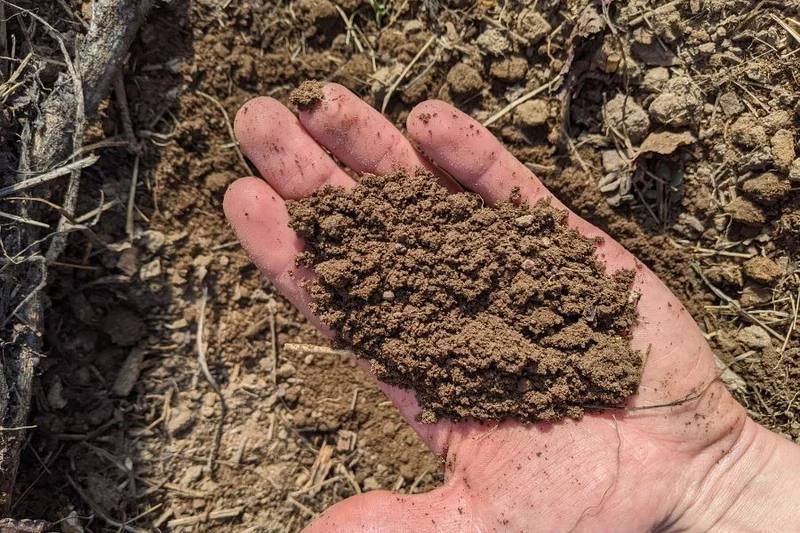
We are indeed talking about periods of extreme heat! During normal periods, needs drop rapidly, often halving or even more when the weather is changeable with clouds present.
Watering Restrictions During Drought and Water Recovery for the Vegetable Garden
Sometimes you will face watering restrictions during drought.
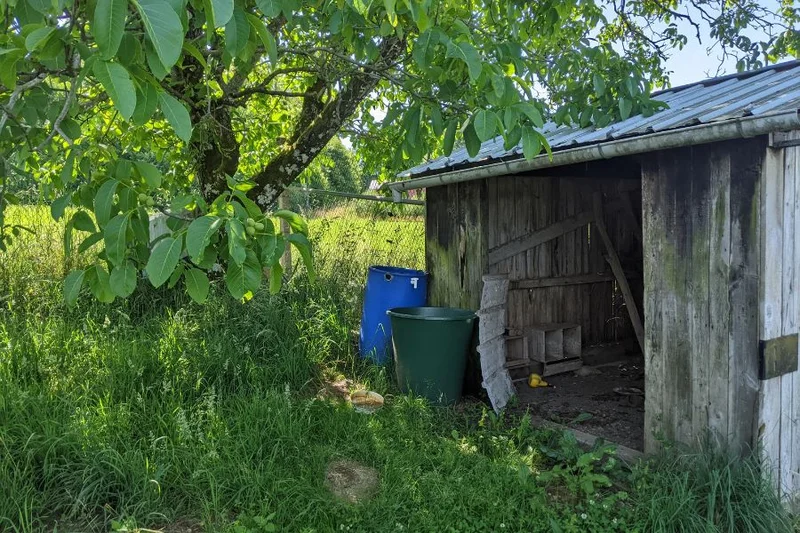
Often, these concern filling pools, washing cars, and not watering areas intended for food production. Thus, you should escape this for your vegetable garden. Nevertheless, this is one more reason to think about collecting rainwater and using it during these very hot periods.
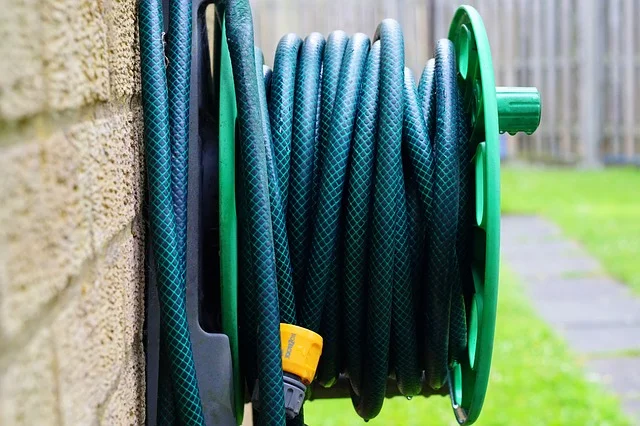
The water from your gutters, for example, can be easily directed into a collection tank.
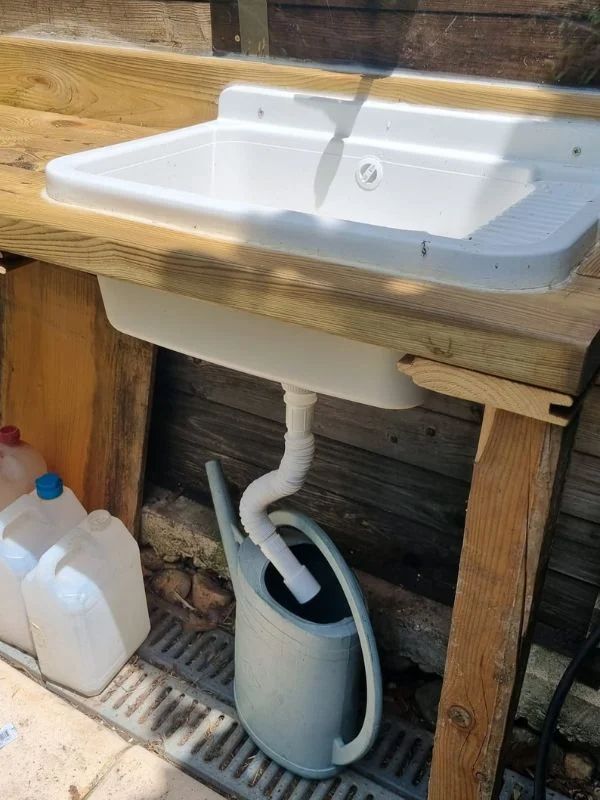
Another example, install a sink in the vegetable garden to collect the water used for cleaning the harvests. That’s 10 liters of water collected for each crate harvested, depending on the harvests, of course, more or less full of soil. All this water can meet the evaporation and transpiration needs for one square meter of crops, for example. And much more as soon as the clouds arrive or temperatures return to normal.
Go further:
• 3 tips for collecting water during drought in the vegetable garden
• How to store rainwater?
How and When to Water the Vegetable Garden During Heatwaves or Droughts?
During a heatwave, the ideal is to recreate rain...
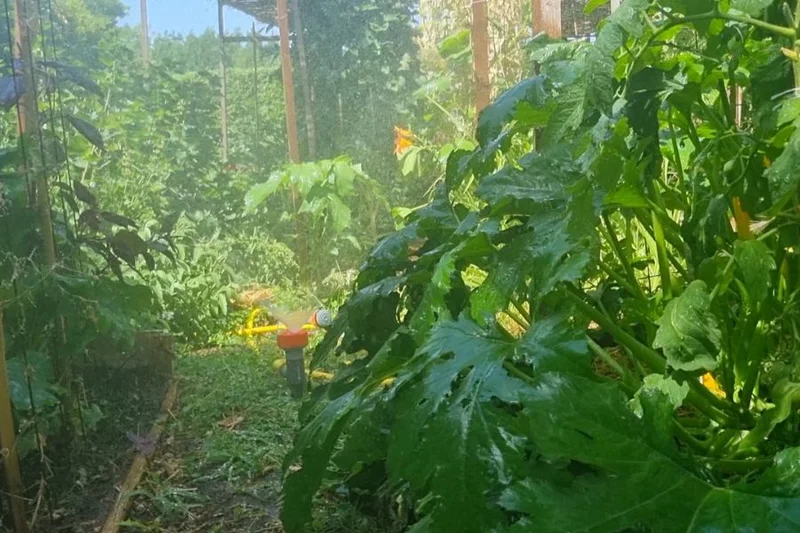
A fine sprinkling (in the morning!), a very gentle watering can, a moistened soil and mulch: these are the best conditions for plants during these times. However, we cannot always provide this environment for our plants, as heatwaves are often coupled with droughts. A drip irrigation system will then do perfectly: the most important thing is to supply the roots with water.
This drip system will save precious water instead of soaking the mulch and letting it become waterlogged.
If you are not short on water, crops will still appreciate a bit of water on the leaves and mulch to increase ambient humidity. Some vegetables see a productivity gain from this, like peppers that love sprinkling.
Go further: Does mulch allow water to pass through?
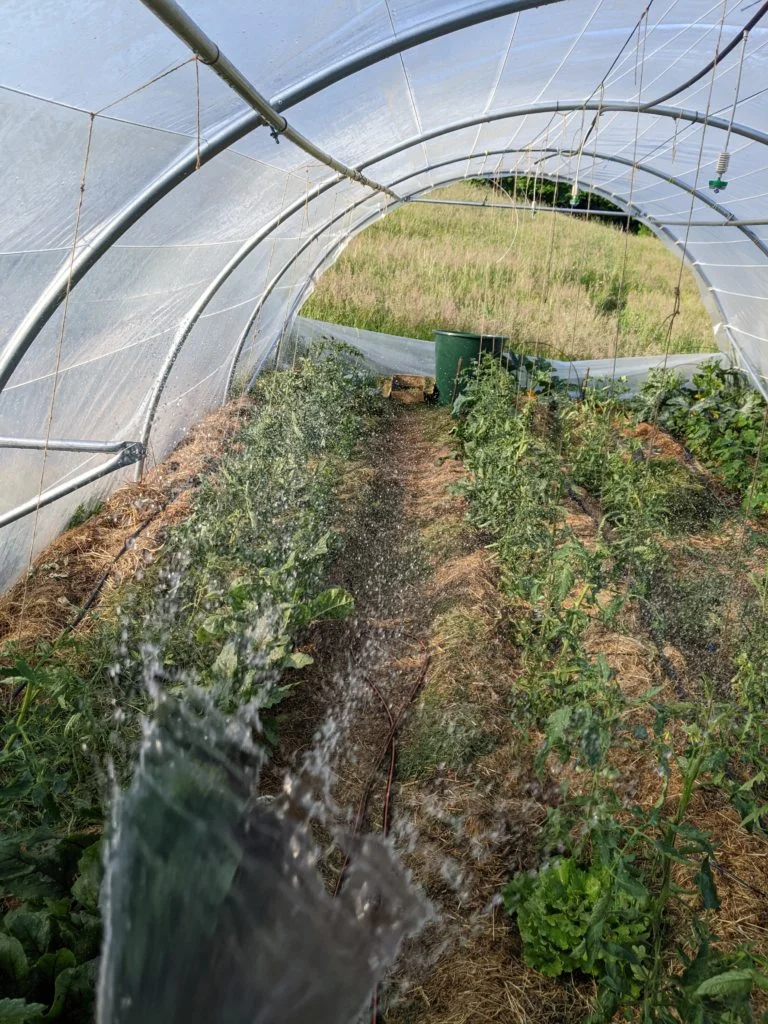
As for the ideal time, it is often early morning if your nights are cool. This will not be the case during heatwaves when you can water in the evening.
Drought periods do not prevent (in the northernmost regions or at medium altitudes) having quite cool nights even in the middle of summer. In this case, perhaps avoid watering before nightfall. This would be conducive to slugs, snails, and especially the development of fungal diseases like downy mildew.
So to summarize: in case of announced extreme temperatures, water one watering can per m² and ideally in the early morning. Unless nighttime temperatures are very high, in which case watering in the evening will allow the water to penetrate well.
Now let’s see other tips to protect the vegetable garden from heatwaves and reduce your watering needs. This way, you can space them out or water less abundantly each time.
Shading to Limit Drought in the Vegetable Garden
Plants require the same well-being as the gardener, 27 to 28° maximum. Yes, forget the idea that the hotter it is, the better it is for our cucumbers, tomatoes, zucchinis, carrots... At best, eggplants, peppers, melons, and watermelons enjoy roasting in full sun. But even they start to show signs of exhaustion as soon as temperatures exceed 30°. And what about 35 to 40°...
Shading is a fantastic solution to protect against such heat extremes.
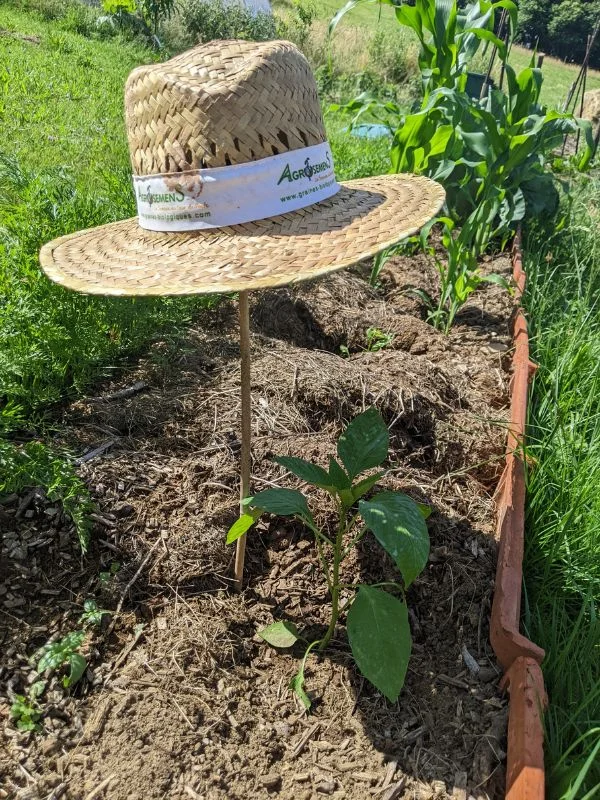
The comparison is quickly made with the gardener who puts on a straw hat in such situations. Temperatures can drop easily by 10°. Suddenly, you find yourself in a completely different environment. Sure, you lose a bit of brightness, but what’s the problem?
Crops do not need full sunlight for 12 hours a day. With 6 to 8 hours, it is already more than enough. Partially shading your crops, as we will see, allows us to remain within these equivalents of light received by the crops.
Shade Cloths
In addition to being aesthetic, they are very effective. You create a support structure using beams and stakes. Quickly, you can roll out this solution over your crops, which stops more than 50% of the sun's rays. The temperature drops suddenly and the crops revive. You can find rolls in any hardware store or garden centers. Also, keep an eye out for good deals on classified ad sites.
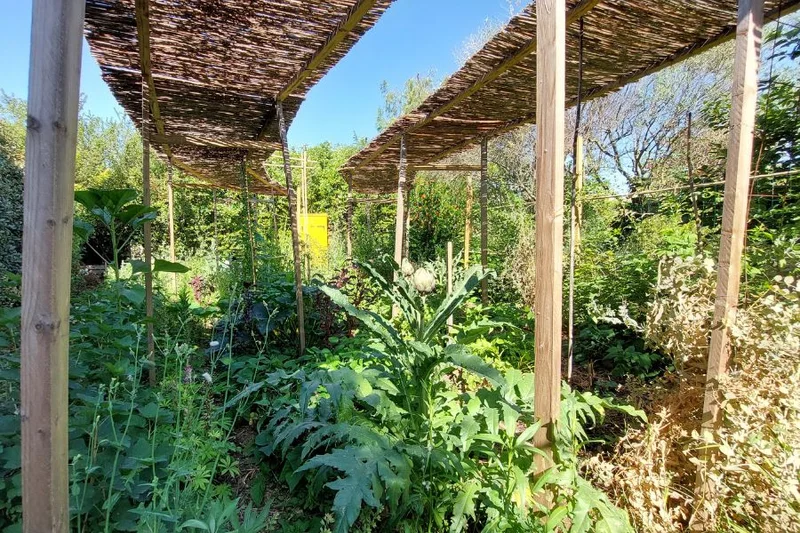
They are durable. So their cost (count on 6 to 10 € per m²) will be amortized over many years. Moreover, do not hesitate to install them on one side one year, and on the other the following year. The impact of shading can be significant for your crops.