Argentina Celebrates World Cup Victory with Falklands Banner
After defeating England in the World Cup semi-finals, Argentina's team displayed a politically charged banner referencing the Falklands War, raising concerns about potential FIFA repercussions.
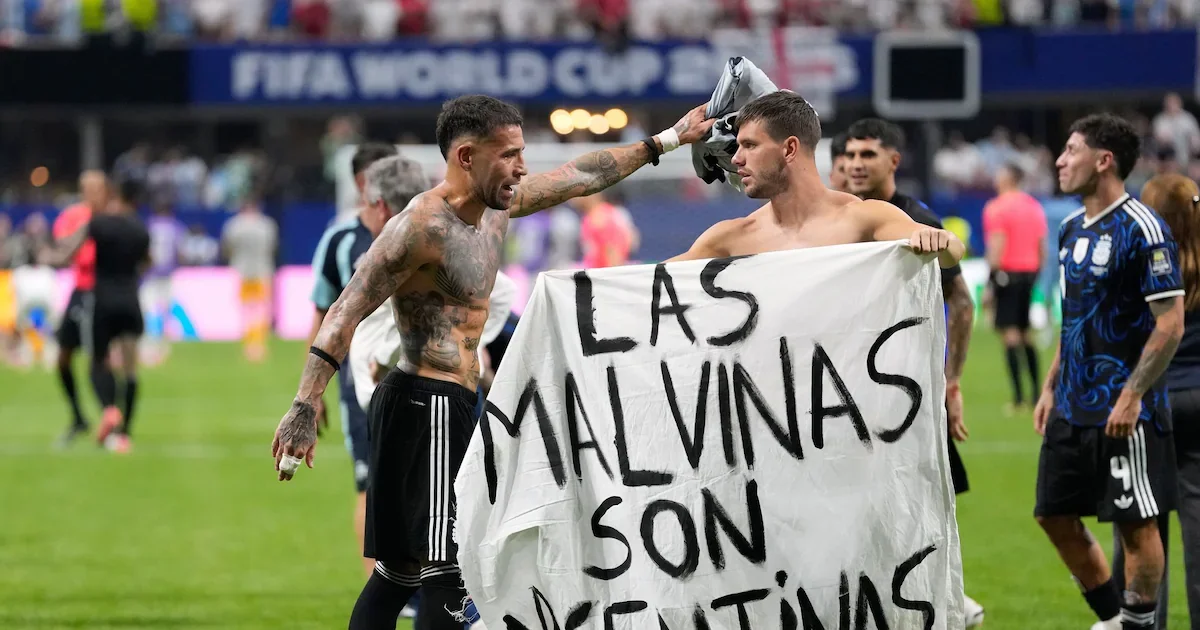
Following their semi-final triumph against England, the Argentine national football team made headlines by displaying a politically charged banner referencing the Falklands War. This act has raised concerns that FIFA may take action against the team.
During the match, the Argentine players celebrated their 2-1 victory with a banner that read, "Las Malvinas son argentinas" ("The Malvinas are Argentine"). The message was prominently displayed on a white sheet held by midfielder Giovani Lo Celso, and it was also visible in the stands. With this win, Argentina has advanced to the World Cup final where they will face Spain.
The Falklands Conflict: A Historical Perspective
The phrase used on the banner underscores Argentina's longstanding claims over the Falkland Islands, known as Las Malvinas in Argentina. The conflict between Argentina and the United Kingdom over these islands escalated into war in 1982, lasting more than 70 days and resulting in the deaths of approximately 1,000 soldiers. Since 1833, the islands have been a British Overseas Territory, and the UK has consistently refused to negotiate Argentina's claims to the islands.
FIFA's Stance on Political Messages
FIFA maintains a strict policy against political messages during World Cup events, which could spell trouble for the Argentine team. Prior to the match, Argentina's coach Lionel Scaloni cautioned against conflating the World Cup semi-final with the historical conflict.
In contrast, the Vice President of Argentina, Victoria Villarruel, expressed a different viewpoint. She stated on social media, "We are playing against the pirate usurpers. This is not just any game." Villarruel, whose father fought for Argentina during the military dictatorship in the Falklands War, emphasized her intent to speak candidly about the significance of the match against England.