Declassified UFO Files: What American Reports Really Hide (or Don't) - Space Tales
Trump ordered the declassification of UFO files in 2026. What the AARO and NASA reports really say, and why some lawmakers see it as a distraction from the Epstein files.
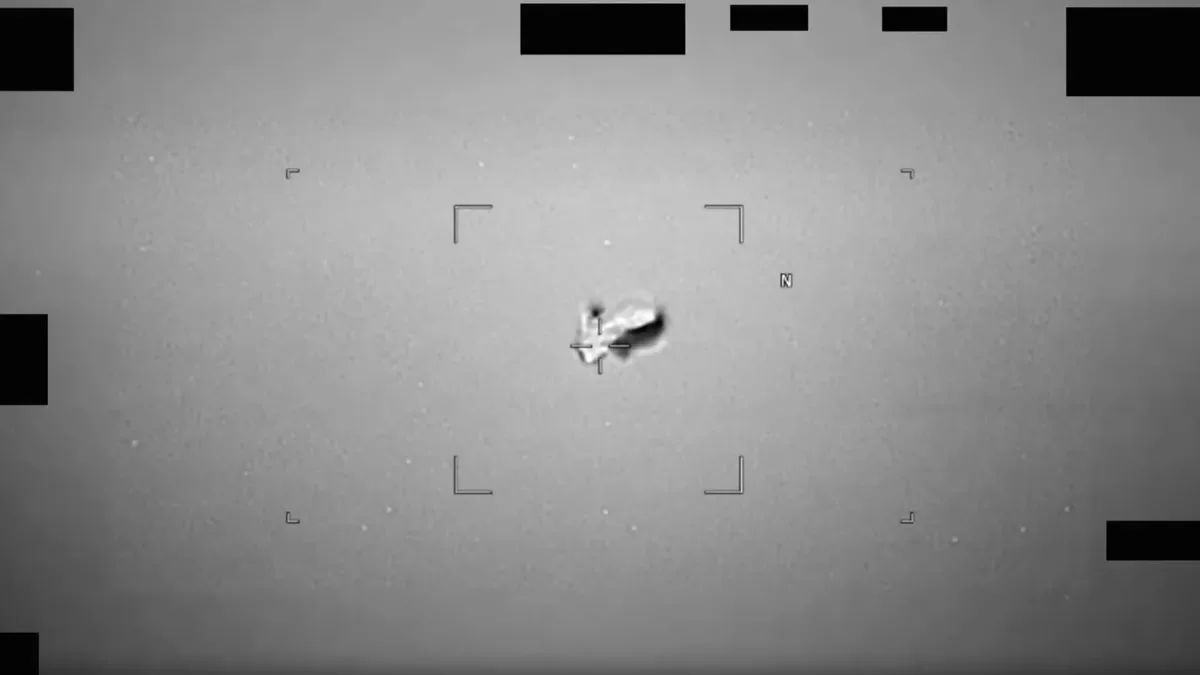
The Pentagon has just released the first series of declassified UFO files, following a directive from Donald Trump. Hundreds of pages of military reports, videos, and transcripts of pilot interrogations. Enough to fuel all sorts of theories. Except that the official reports say something much more mundane: no evidence of extraterrestrial origin. And several American lawmakers mainly see this operation as an attempt to divert attention from the Epstein files.
160+ UAP Files published in the first wave of declassification (May 2026)
80 years Period covered by the AARO report 2024, from 1945 to 2023
0 Evidence of extraterrestrial origin according to AARO, NASA, and ODNI
2021 Institutional start of the process, mandated by Congress before Trump
Why Washington is Finally Talking About UFOs
A process that started long before Trump
The May 2026 declassification follows a directive signed by Donald Trump asking federal agencies (DoD, NASA, FBI) to identify and prepare their UAP archives for future coordinated disclosure. The announcement made a lot of noise. The reality is more sober: this movement did not originate with Trump. It was mandated by Congress as early as 2021, when the Senate required the intelligence community to provide a public report on unidentified aerial phenomena. The AARO (office dedicated to anomalies) was created in 2022. The process was already underway.
What Trump added was the communication. He transformed an administrative procedure into a political event by tweeting "What the hell is going on?" a few hours before the publication. The substance did not change. The spectacle did.
UAP, UFO: what's the difference?
The U.S. government has replaced the term "UFO" (unidentified flying object) with "UAP" (Unidentified Aerial Phenomena) since 2021. The change is mostly semantic: it aims to take the subject out of the realm of ridicule and give it a serious framework of air and national security. A UAP can be an adversarial drone, a weather balloon, a sensor artifact, or, in rare cases, something still unexplained. Not necessarily an alien spacecraft.
The real reason: security, not extraterrestrials
In 2020, the Pentagon declassified three videos filmed by U.S. Navy pilots ("FLIR", "Gimbal", "GoFast"). These videos had already leaked and were circulating everywhere. The official declassification was not aimed at revealing something: it was intended to confirm that the videos were authentic and to clarify that they did not reveal any sensitive capabilities of American systems. An administrative cleanup, not a revelation.
Behind this partial transparency, there are mainly two concrete concerns. The first: to encourage military pilots to report incidents without going through social media, in a standardized framework. The second: to verify whether some of these phenomena could be adversarial drones or foreign observation systems. Extraterrestrials are far down the list of priorities.
What Official Reports Really Say
Three agencies, the same conclusion
ODNI — 2021
Preliminary UAP report
First public report mandated by Congress. Emphasizes risks to air and national security. Does not conclude an extraterrestrial origin. Mainly notes the lack of quality data.
NASA — 2023
Independent panel report
Panel of experts convened by NASA. Conclusion: no evidence of extraterrestrial origin in the available data. Main criticism: compressed videos, uncalibrated sensors, missing metadata. Recommends a rigorous scientific approach.
AARO — 2024
63 pages, 80 years of archives
The most comprehensive report. Covers 1945 to 2023. Conclusion: no evidence of extraterrestrial technology, no evidence of secret programs for reverse-engineering alien crafts. The majority of cases studied are misidentified ordinary objects.
Three reports, three times the same conclusion. Unidentified aerial phenomena exist. They deserve to be studied seriously. But nothing in the available data points to a non-human origin. What the reports rather highlight is the systematic poor quality of data: blurry videos, uncalibrated sensors, uncorroborated testimonies. The problem is not that something is being hidden. It’s that observations are poorly conducted.
Disinformation organized by the Pentagon itself
One angle that recent reports discreetly address: during the Cold War, the U.S. Air Force actively encouraged certain UFO narratives to protect its secret programs. When a civilian or journalist reported something strange in the sky, suggesting the idea of a flying saucer was more convenient than admitting the existence of a U-2, an SR-71, or an experimental drone. The UFO myth has sometimes been fueled by the Pentagon itself, precisely to avoid other questions.
What the Navy still refuses to show
In response to a FOIA request in 2022, the U.S. Navy acknowledged possessing other UAP videos but refused to release them. Reason: their disclosure "would harm national security," as they would reveal sensor capabilities, vulnerabilities, or tactics. The three known videos could only be declassified because they had massively leaked beforehand, making secrecy untenable. The criterion for declassification is not "it's interesting" but "it's already out there and says nothing about our systems."
The Distraction Accusation: Serious or Conspiracy?
Republican lawmakers themselves denouncing the timing
Trump's directive on UFOs was published just hours after a vote in Congress on the Epstein files. This timing did not escape everyone, including in the Republican camp.
"The Epstein files will not disappear, even for aliens."
Thomas Massie, Republican representative from Kentucky, calling the UFO directive the "ultimate weapon of mass distraction."
Marjorie Taylor Greene refers to it as "shiny object propaganda": according to her, the White House would release UFO files to divert public attention from rising prices, wars, and the incomplete handling of the Epstein documents. Al Jazeera and ABC News note the same argument in their analyses of the publication's timing.
What can be sourced, and what cannot
That Massie, Greene, and others accuse Trump of using UFOs as a distraction from the Epstein files: yes, this is documented and sourced. That it is a deliberate and coordinated intention from the White House: no, there is no internal evidence to demonstrate this. Reuters and Forbes explicitly note: these are timing criticisms, not evidence of coordination. The UAP declassification process predates Trump by several years and comes from a law passed by Congress in 2021.
In other words: the distraction may be real in its effects. It is not necessarily intentional in its design. The nuance is important.
What to Expect Next
The first wave of 160 files published in May 2026 is just the beginning. More series of documents are announced. The public will likely find pilot testimonies, incident reports, low-quality photos, and a few cases that analysts still cannot explain. What would be surprising is to find evidence of extraterrestrial crafts. It would be a bit disorderly to slip that into a PDF between two radar maintenance reports.
What the declassification can concretely bring is a better understanding of the gaps in American surveillance systems, an incentive to standardize reports of unusual aerial incidents, and perhaps a more honest look at what American secret aircraft are really doing in the sky. That is useful. Little green men are for posters.