The 5 Best OBD2 Anti-Theft Devices for Cars 2026
The theft by hacking the OBD2 port is on the rise in France, particularly among premium sedans and SUVs. Five anti-theft devices—from physical covers with security screws to connected GPS trackers—are analyzed and compared here to help every owner choose the protection suited to their vehicle and budget.
The theft by hacking the OBD2 port is on the rise in France, particularly among premium sedans and SUVs. Five anti-theft devices—from physical covers with security screws to connected GPS trackers—are analyzed and compared here to help every owner choose the protection suited to their vehicle and budget.
Protecting Your Vehicle Against OBD2 Hacking: What to Understand Before Buying
Since the mid-2010s, a car theft technique has spread across Europe: mouse jacking, or theft by hacking the OBD2 port. The principle is simple and alarmingly effective. The OBD2 (On-Board Diagnostics, version 2) port is a standardized connector found on all vehicles produced after 2001 in Europe. Originally designed for mechanical diagnostics in workshops, this port also provides access to the vehicle's onboard electronics. By connecting a programming device, a thief can, in just a few minutes, clone or reprogram a blank key, unlock the vehicle, and start the engine without forcing any locks.
The most targeted brands are those whose keyless entry systems are widespread: Toyota, BMW, Mercedes-Benz, Volkswagen, Renault, and Peugeot. A professional mechanic takes between five and fifteen minutes to reprogram a key in the workshop; an experienced thief can replicate the operation in two to three minutes in an underground parking lot.
In response to this threat, the market has developed several families of complementary solutions:
- Physical key locks: they mechanically block the OBD2 port, preventing any connection from an external device.
- Armored boxes with encrypted keys: they combine stainless steel shielding with a specific key locking system, making access to the port nearly impossible without the owner's key.
- Electronic protection boxes: placed between the OBD2 port and the vehicle's CAN network, they block any unauthorized communication.
- Connected GPS trackers: they plug into the OBD2 port to monitor the vehicle in real-time and alert the owner in case of abnormal use.
To choose the right device, it is essential to evaluate four main criteria: the level of protection (physical or electronic), the ease of installation, the compatibility with the vehicle in question, and the cost-to-value ratio of the protected vehicle. A premium SUV worth €45,000 justifies a more significant investment than an entry-level city car.
EXOSFER OBD Protect – Electronic Protection Against Mouse Jacking
Offered at €99.00, the EXOSFER OBD Protect takes a different approach from simple physical covers: it acts directly on the electronic level to block any hacking attempts via the OBD2 port. Its positioning explicitly targets mouse jacking and key reprogramming, two of the most common theft techniques for recent sedans and SUVs.
Active Protection Against Key Cloning
Where a physical cover merely obstructs access to the port, the EXOSFER intervenes on the vehicle's communication network. By interposing itself between the OBD2 port and the CAN bus, it neutralizes ECU reprogramming attempts without disrupting legitimate diagnostic functions of a mechanic. This duality—active protection during regular use, transparency for workshop diagnostics—constitutes its main differentiating asset.
Universal Installation Without Wiring Modifications
Installation requires no special tools and can be completed in just a few minutes. The device is advertised as universal, making it compatible with the vast majority of vehicles equipped with an OBD2 port, across all brands. For owners who are not comfortable with automotive electronics, this is a significant selling point.
Limitations to Know
The EXOSFER does not protect against a brute force attempt to tear out the wiring. It operates solely on the software and electronic level. Its effectiveness thus depends on the sophistication of the attack: against a thief equipped with a simple key programmer, it offers serious protection; against a determined physical attack, a complementary mechanical lock is still advisable.
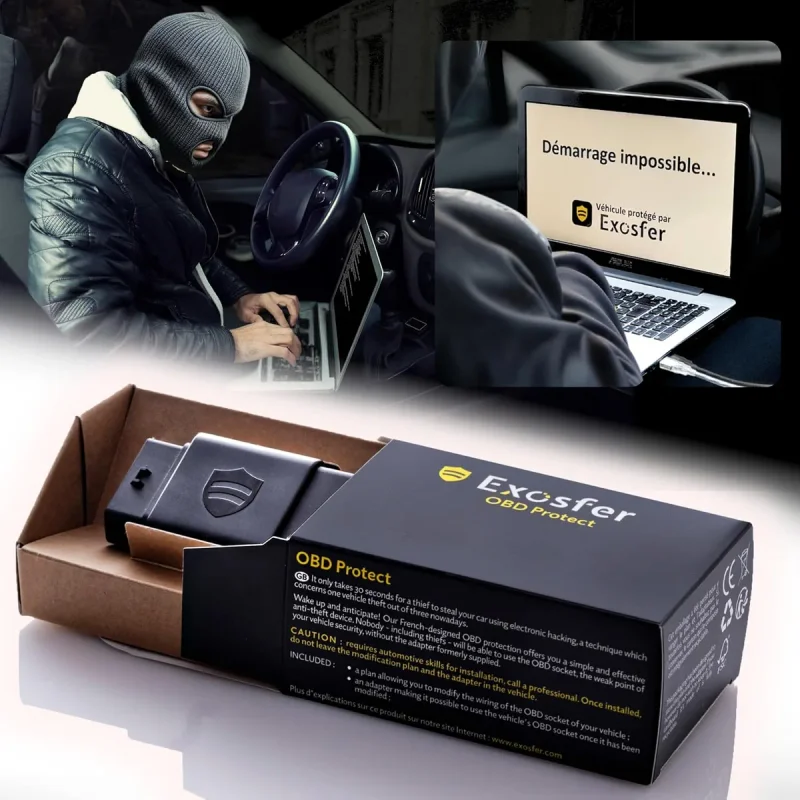
| Characteristic | Detail | |----------------|--------| | Type of protection | Electronic (OBD2 software blocking) | | Targeted threats | Mouse jacking, key cloning, ECU reprogramming | | Installation | No tools, a few minutes | | Compatibility | Universal (all OBD2 vehicles) | | Material | Not specified (electronic box) |
Blockbox Blind-OBD KeyPlus – Stainless Steel Shielding with Encrypted Key
At €159.00, the Blockbox Blind-OBD KeyPlus is the most expensive device in this selection and the most elaborate mechanically. Its casing made of 304 stainless steel physically envelops the OBD2 port and can only be opened with the encrypted key provided to the vehicle owner.
High-Level Mechanical Security
The 304 stainless steel design resists cutting and attempts to tear it off. As long as the owner's key is not inserted, no diagnostic computer can access the port. The manufacturer also specifies that the device does not void the manufacturer's warranty, an important point for owners of recent vehicles still under warranty.
Main Limitation
Its high price and the absence of an active electronic component make it less relevant against contactless attacks (keyless relays). However, it remains the reference solution for owners seeking maximum physical protection of the OBD2 port.
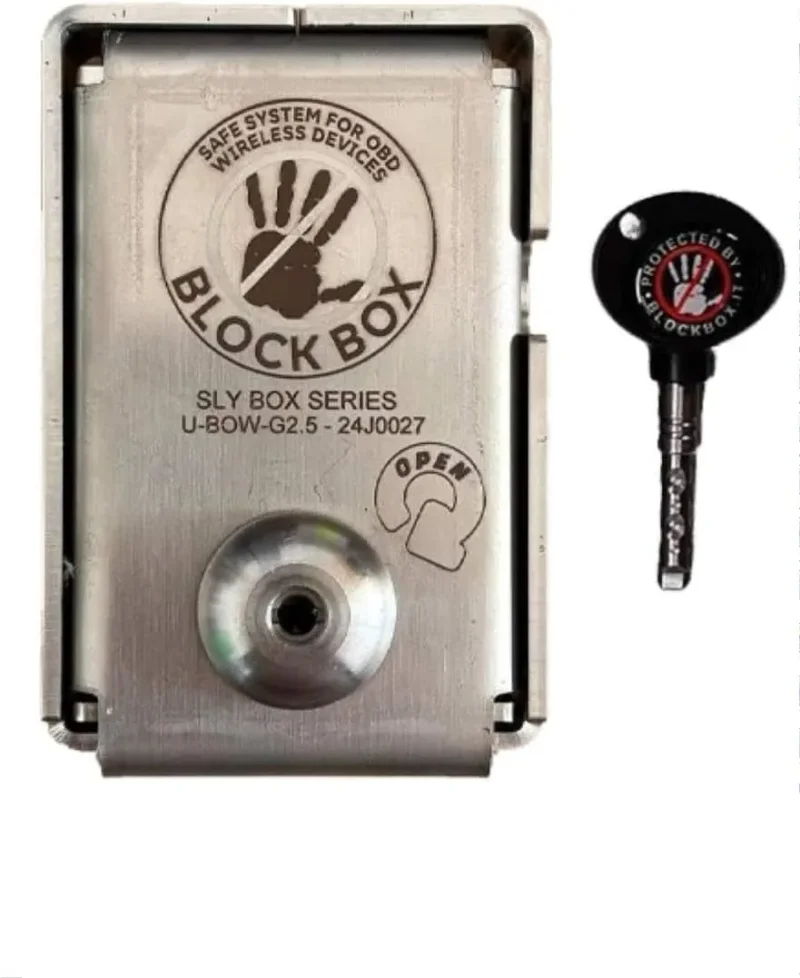
| Characteristic | Detail | |----------------|--------| | Type of protection | Physical (encrypted key stainless steel shielding) | | Material | 304 stainless steel | | Manufacturer's warranty | Not voided | | Access mechanism | Proprietary encrypted key | | Compatibility | Standard OBD2 ports |
BI OBD Immobilizer – The Metal Cap Installed in Five Minutes
Priced at €77.71, the BI OBD Immobilizer occupies the mid-range of this selection. It offers physical protection of the OBD2 port through a metal cap secured with security screws, accessible only with the special key provided in the kit.
Extensive Compatibility and Quick Installation
The device is advertised as compatible with diesel vehicles from 2004 and gasoline vehicles from 2001, covering almost the entire French vehicle fleet affected by the OBD2 threat. Its installation is estimated at about five minutes, without dashboard disassembly or electrical intervention. For an owner not accustomed to vehicle work, this simplicity is crucial.
Mechanical Resistance and Security Screws
The metal cap resists manual removal attempts. The special security screws increase the difficulty level for an unprepared thief. However, an individual with a screw extractor or specialized tools could bypass this lock with more time and equipment. The protection thus remains deterrent rather than absolute against a highly determined attacker.
Cohesive Protection/Price Ratio
At under €80, the BI OBD Immobilizer represents accessible physical protection for owners of mid-to-high-value vehicles. It is particularly suitable for mainstream sedans and SUVs (Volkswagen Golf, Peugeot 3008, Renault Austral) whose value justifies an investment at this level without reaching the prices of high-end stainless steel shields. Its main drawback is the absence of any electronic component: it offers no protection against contactless relay keyless attacks.
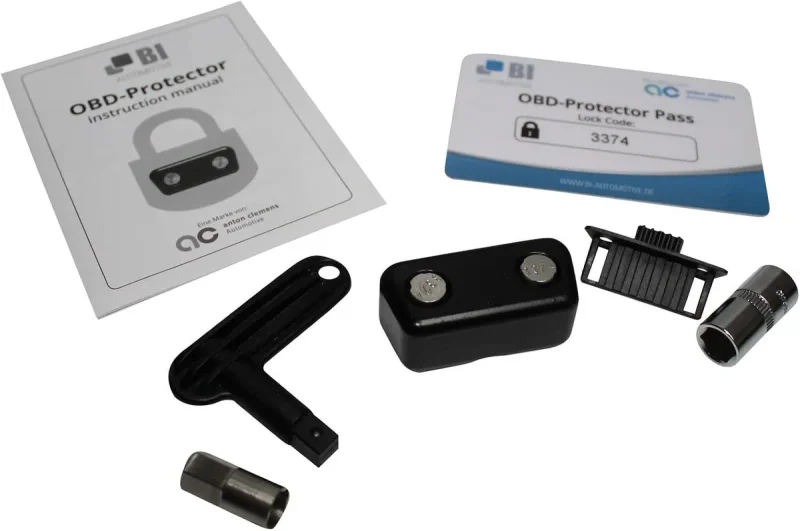
| Characteristic | Detail | |----------------|--------| | Type of protection | Physical (metal cap with security screws) | | Installation time | About 5 minutes | | Compatibility | Diesel from 2004, gasoline from 2001 | | Material | Metal (cap) + special key included | | Standard OBD | Universal OBD-2 |
CARLOCK 4G GPS Tracker – Connected Monitoring via the OBD2 Port
The CARLOCK stands out radically from the other products in this selection: at €44.90 at purchase, it does not physically block the OBD2 port but connects to it to transform the vehicle into a constantly monitored connected object. Its approach is complementary, not substitutive, to physical locks.
Geolocation and Real-Time Alerts
Plugged into the OBD2 port, the CARLOCK tracker communicates via the 4G network with a mobile app available on Android and iOS. Whenever the vehicle is moved, the engine starts, or a shock is detected, a notification is sent to the owner's smartphone. Notably, the device continues to function even if it is unplugged, thanks to an internal backup battery—a crucial technical detail, as the first action of a thief is often to disconnect any accessory plugged into the OBD2 port.
Extended Functions Beyond Anti-Theft
The CARLOCK also includes monitoring of driving habits (accelerations, braking, turns), vehicle battery monitoring, and a detailed travel history. These functions make it useful in a family context, for tracking a novice driver, or for a small fleet of vehicles.
Subscription Cost to Include in the Calculation
The subscription to the cloud service is charged at €7.90 per month (first month free). Over twelve months, the total cost for the first year reaches approximately €131—more than the Blockbox Blind-OBD KeyPlus. This figure must be factored into the budget comparison. The data is hosted within the European Union, in compliance with GDPR.
Structural Limitation
The CARLOCK does not prevent theft; it detects and records it. Coupled with a physical lock on the OBD2 port, it constitutes a relevant combination—one blocking the connection, the other alerting in case of suspicious movement.
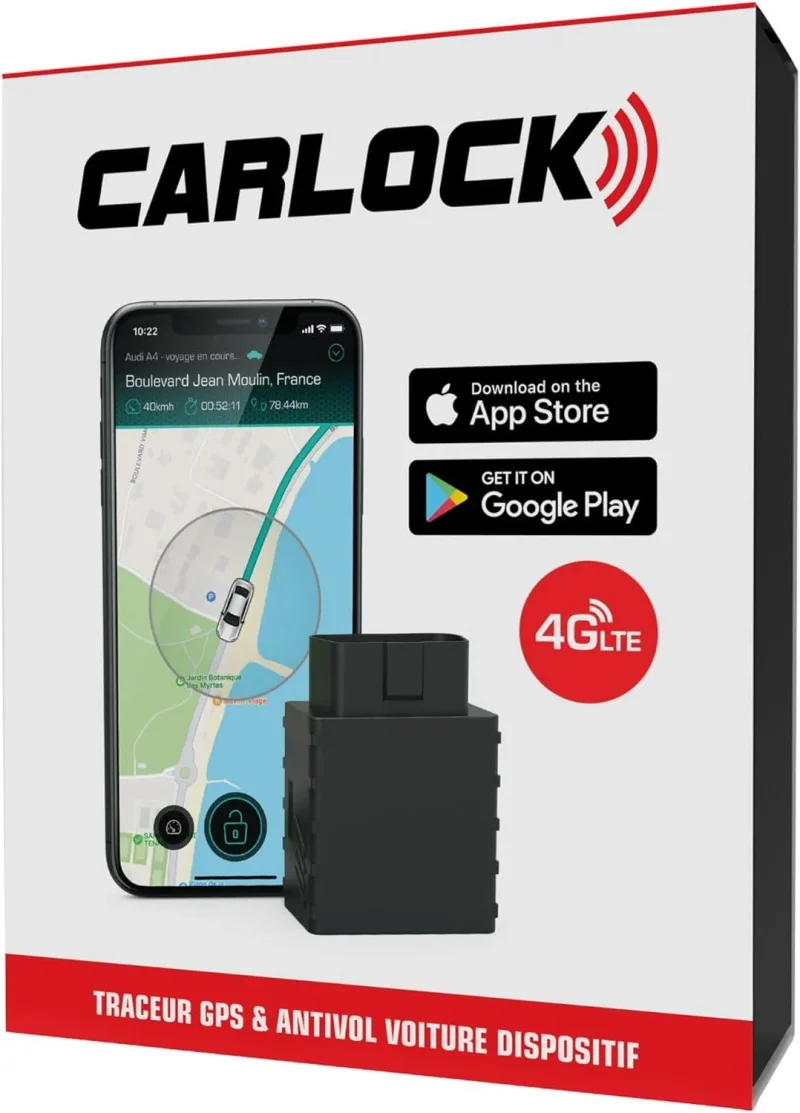
| Characteristic | Detail | |----------------|--------| | Type of protection | Connected GPS monitoring (4G) | | Alerts | Movement, starting, shock, disconnection | | Mobile app | Android and iOS | | Monthly subscription | €7.90 / month (1st month free) | | Data hosting | European Union (GDPR) |